B2B Wholesale 3PL and Fulfillment Services
Learn how to find a 3PL, warehouse, and fulfillment services in b2b wholesale. What to look for, requirements, and traps to avoid.


Key takeaways to Find a B2B Wholesale 3PL
EDI Compliance Full EDI document exchange for 850, 856, 810, and 940/945 to meet retailer trading-partner requirements.
Multi-UOM Picking Accurate picking across pallet, case, and each quantities with case-pack conversion in the WMS.
LTL & FTL Freight Negotiated carrier rates with LTL and full-truckload management, BOLs, and retailer delivery appointments.
Routing Guide Adherence GS1-128 carton labeling, ASN generation, and routing-guide execution to avoid retailer chargebacks.
Kitting & Display Builds Kitting, bundling, ticketing, and display-ready pallet assembly so shipments arrive floor-ready.
Bulk Pallet Storage Racked and floor pallet storage with cycle counting and lot tracking for high-volume wholesale inventory.
What is B2B Wholesale fulfillment
Our b2b wholesale network is built for operators who understand your product, compliance, and velocity requirements.
Storage
Goods are received, checked in and held in conditions suited to what they are.
Inventory Management
Stock is counted, tracked by location and kept in sync with your sales channels.
Picking
Orders are picked from their locations, batched and routed to a pack bench.
Packing
Items are packed, protected and labelled, with any branded materials applied.
Shipping
Parcels are manifested, rated across carriers and handed over for despatch.
Returns
Returns are received, inspected and graded, then restocked or dispositioned.
Why B2B Wholesale brands might need a specialized 3PL
The handling, compliance and volume problems that make b2b wholesale harder to fulfil than most categories.
Challenges to consider
Product handling
B2B Wholesale stock has its own rules about how it is received, where it can sit, and what damages it. A generalist warehouse learns those rules on your inventory, and the lesson is usually a write-off.
Product handling
B2B Wholesale stock has its own rules about how it is received, where it can sit, and what damages it. A generalist warehouse learns those rules on your inventory, and the lesson is usually a write-off.
SKU complexity
Variants multiply quickly in B2B Wholesale. Every size, finish, or bundle is a separate thing to count, pick, and reconcile, and a thin inventory system loses accuracy as the catalogue grows.
SKU complexity
Variants multiply quickly in B2B Wholesale. Every size, finish, or bundle is a separate thing to count, pick, and reconcile, and a thin inventory system loses accuracy as the catalogue grows.
Seasonal demand
B2B Wholesale rarely sells evenly across the year. Peaks need labour and space that are wasteful to carry through the quiet months, so flexible capacity matters more than a low headline rate.
Seasonal demand
B2B Wholesale rarely sells evenly across the year. Peaks need labour and space that are wasteful to carry through the quiet months, so flexible capacity matters more than a low headline rate.
High return volumes
Margin leaks while a returned unit waits to be graded. Ask who inspects B2B Wholesale returns, what each one costs to process, and how quickly sellable stock goes back into your available inventory.
High return volumes
Margin leaks while a returned unit waits to be graded. Ask who inspects B2B Wholesale returns, what each one costs to process, and how quickly sellable stock goes back into your available inventory.
Branded packaging
Presentation is part of the product. Inserts, custom cartons, and gift options all need a partner willing to hold your materials and follow a spec, rather than defaulting to a plain box.
Branded packaging
Presentation is part of the product. Inserts, custom cartons, and gift options all need a partner willing to hold your materials and follow a spec, rather than defaulting to a plain box.
Labeling & compliance
B2B Wholesale carries labelling and documentation requirements that change by channel and destination. Retail routing guides and marketplace rules both reject shipments that miss them.
Labeling & compliance
B2B Wholesale carries labelling and documentation requirements that change by channel and destination. Retail routing guides and marketplace rules both reject shipments that miss them.
Seamless E-commerce Integration with Your Business
Connect the carts and marketplaces you already sell on. Matched b2b wholesale providers sync orders, inventory and tracking without manual exports.
Read-only
Secure OAuth. We never write to your store.
~2 minutes
Connect and start importing right away.
Zero forms
Your RFQ is generated from your data.
Scored matches
Competitive 3PL bids in your demand regions.
 Shopify
 Amazon
 WooCommerce
 Wix
Submit an RFQ in minutes and get customized fulfillment listings instantly.
What to look for in a 3PL for b2b wholesale
The capabilities that separate a provider who fits b2b wholesale from one who simply has space.

Industry Experience
A provider who already runs b2b wholesale knows its handling rules, the shape of its peaks and the paperwork it attracts. Ask how long they have held accounts in the category and which of their clients look like you.
Submit RFQ
Storage Capabilities
How b2b wholesale is held decides what it costs to ship and what condition it arrives in. Confirm the storage types on offer, the conditions they are kept in, and what happens to your rate when you need more space than you forecast.
Submit RFQ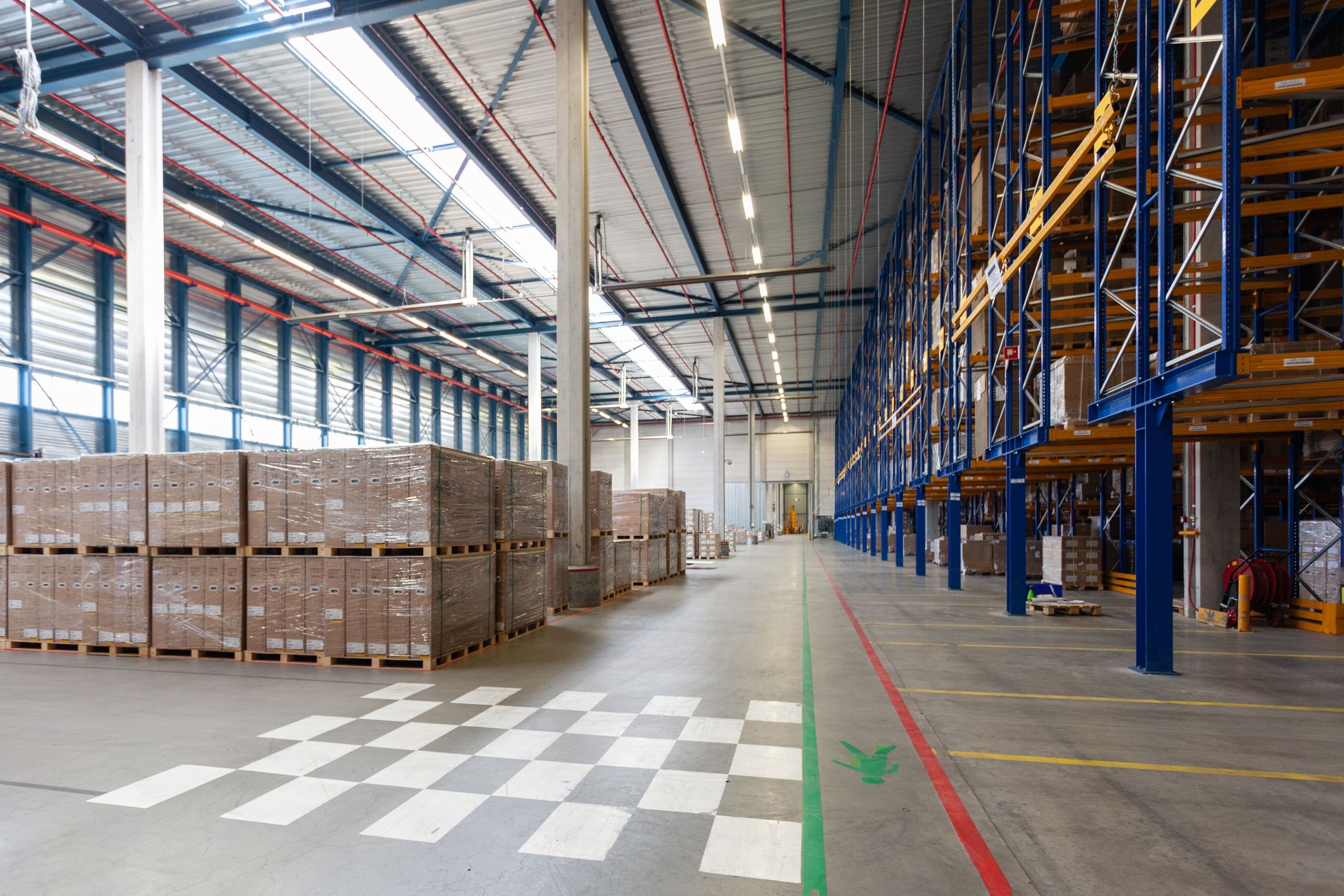
Returns Management
Returns are where margin quietly leaks. Find out who inspects and grades a return, what it costs per unit, and how quickly sellable stock goes back into your available inventory.
Submit RFQWhy use WareMatch?
The 3PL marketplace built for businesses today: one request, vetted matches, and open quotes.
How WareMatch works
One request replaces weeks of calls, spreadsheets and follow-ups.
Share your requirements
One free request for quote replaces a separate form for every warehouse. One form, five minutes.
Get matched instantly
WareMatch compares your requirements against vetted 3PLs and shows you the providers that match.
Get quotes and connect
Request quotes with one click. Competing bids arrive in 24–48 hours, side by side.
B2B Wholesale 3PL and Fulfillment Marketplace
Browse, compare and get quotes from 3PLs across the network. Filter by the capabilities your business needs.


Total SQFT
Certifications
Services


Total SQFT
Pallet Positions
Certifications
Services


Total SQFT
Pallet Positions
Certifications
Services


Total SQFT
Pallet Positions
Certifications
Services


Total SQFT
Certifications
Services


Ecom Automation Prep
5.0(23)Total SQFT
Pallet Positions
Certifications
Services
Not sure which fulfillment partner is right for your brand?
Submit an RFQ to receive customized listings, or book a free consultation with a WareMatch expert.
Frequently Asked Questions
What brands ask before choosing a b2b wholesale 3PL.
What is B2B wholesale fulfillment, and how does it differ from D2C fulfillment?
B2B wholesale fulfillment is the process of storing, packing, and shipping bulk inventory to retail partners, distributors, or other businesses rather than individual consumers. Unlike Direct-to-Consumer (D2C) fulfillment, which focuses on shipping single parcel orders directly to a shopper's doorstep, B2B fulfillment involves shipping large volumes of goods on pallets or in master cartons via freight (LTL/FTL), requiring strict adherence to retailer routing guides, EDI compliance, and specialized labeling. When shipping to major retailers (like Walmart, Target, or Costco), brands must follow a Routing Guide detailing exactly how products must be packaged, labeled, scheduled, and delivered—failure to comply results in costly chargebacks or outright rejection of the shipment. Key differences: B2B uses bulk quantities (pallets, master cartons, full truckloads) with LTL/FTL/ocean/rail shipping, highly strict retail routing guides and GS1-128 labels, EDI/ERP integrations, and pallet storage/receiving/bulk-out fees; D2C uses individual items and small parcels with parcel carriers, minimal compliance (standard carrier labels), shopping cart integrations (Shopify, WooCommerce), and pick-and-pack fees per item.
What is EDI compliance in B2B wholesale logistics, and why is it critical?
EDI (Electronic Data Interchange) compliance is the automated, standardized exchange of business documents—such as purchase orders, shipping notices, and invoices—between a brand's inventory system and a retailer's system. It is critical because major retailers require EDI to eliminate manual data entry, reduce shipping errors, and track inventory movements in real-time. Essential EDI document types include EDI 850 (Purchase Order) sent by the retailer to place an order; EDI 856 (Advance Shipping Notice / ASN) sent by the 3PL to notify the retailer of contents, packaging structure, and tracking before arrival; EDI 810 (Invoice) sent by the brand to request payment; and EDI 846 (Inventory Inquiry) used to sync inventory levels. Without EDI compliance, a brand cannot sell to major big-box retailers. The ASN must be transmitted and accepted before the physical truck arrives—if it is missing, incorrect, or late, the retailer will issue a severe chargeback penalty.
How do 3PLs prevent retail chargebacks in wholesale distribution?
Third-party logistics providers prevent retail chargebacks by strictly adhering to a retailer's routing guide through automated compliance workflows, precise GS1-128 labeling, rigorous quality control checks, and on-time delivery scheduling. By automating the validation of packing lists, pallet configurations, and shipping windows, specialized B2B 3PLs eliminate the human errors that trigger retailer penalties. Retail chargebacks can range from 1% to 5% of the total invoice value. Primary preventative measures include: automated systems to generate and apply compliant GS1-128 barcodes; coordinating with preferred carriers to secure delivery appointments within MABD (Must-Arrive-By Date) or RAD (Required Arrival Date) windows; ensuring pallets are built to exact height, weight, and wrapping specifications (e.g., heat-treated ISPM-15 pallets for international shipments); and barcode scanning during picking to guarantee 100% order accuracy and prevent shortages or overages penalties.
What are the differences between LTL and FTL shipping in B2B wholesale distribution?
The primary difference between LTL (Less-Than-Truckload) and FTL (Full Truckload) shipping is the volume of cargo and how the freight space is purchased. LTL shipping is used for smaller wholesale shipments (typically 1 to 6 pallets, under 15,000 lbs) where a brand shares truck space and shipping costs with other businesses—pricing is based on weight, volume, freight class, and distance, transit is slower due to multiple consolidation hubs, risk of damage is higher from frequent handling, and precise delivery windows are harder to guarantee. FTL shipping is used for large shipments (typically 10 to 26+ pallets, up to 45,000 lbs) where a brand rents the entire truck exclusively—pricing is a flat rate per mile or lane, transit is faster via direct routes, risk of damage is extremely low since cargo remains sealed, and delivery appointments are highly predictable.
How does WareMatch help brands find the right B2B wholesale 3PL partner?
WareMatch helps brands find the ideal B2B wholesale 3PL partner by providing a centralized, transparent warehousing marketplace where businesses can search, compare, and book warehousing solutions based on specific operational capabilities. The platform is 100% free for brands and merchants to use, allowing you to filter logistics providers by location, EDI capabilities, retail compliance experience, and specialized storage needs without any hidden fees.
What is cross-docking in B2B logistics, and when should a brand use it?
Cross-docking is a lean logistics practice where incoming wholesale inventory from a manufacturer is unloaded directly from an inbound truck or ocean container and loaded immediately onto outbound transport vehicles with little to no storage time in between. Brands should use cross-docking to bypass long-term warehousing costs, accelerate order fulfillment speeds, and streamline bulk distribution to retail partners. Ideal use cases include high-demand, fast-moving goods with predictable sales velocities; pre-sorted retail orders already labeled and packaged for specific stores at the manufacturing plant; backordered inventory that needs to be dispatched immediately upon arrival at the port; and promotional or seasonal launches timed for a synchronized retail shelf-date.
What is B2B kitting and assembly, and how does it support wholesale distribution?
B2B kitting and assembly is the process of taking individual, bulk-stored components or products and combining them into a single, ready-to-ship unit (a kit) or retail-ready display before shipping to a business customer. In wholesale distribution, kitting supports brands by creating custom retail bundles, subscription boxes, multi-packs, and Point-of-Purchase (POP) floor displays that meet specific retailer merchandising requirements. A professional 3PL utilizes specialized assembly lines, custom pack-tables, and automated shrink-wrap tunnels to execute kitting at scale, and the WMS must dynamically update inventory levels across all component parts in real-time. Common use cases include assembling POP cardboard floor stands pre-loaded with products, shrink-wrapping multi-packs and bundles, subscription box assembly, and combining raw parts, instruction manuals, and hardware kits into finished product boxes.
What is a retail routing guide audit, and how does a 3PL perform one?
A retail routing guide audit is a systematic review of a retailer's shipping and compliance manual conducted by a 3PL to align warehouse operations with the retailer's exact requirements. The 3PL performs this audit by analyzing the retailer's rules for packaging, palletization, labeling, EDI transmission, and carrier scheduling, then configuring their Warehouse Management System (WMS) and packing workflows to guarantee 100% compliance and eliminate chargebacks. Steps include: document review of the retailer's latest routing guide; EDI mapping to ensure the WMS can generate required documents like the EDI 856 ASN; WMS configuration with system alerts and mandatory scanning steps; creating visual packing and labeling SOPs for warehouse floor staff; and sending trial pallets to verify that labeling, pallet height, and EDI transmissions pass inspection.
Browse Other Industries
Other 3PL specialties in Retail & B2B Trade, each matched to providers who already handle that inventory.
Find the right fulfillment partner for your brand.
WareMatch helps brands in B2B Wholesale explore relevant fulfillment options, compare providers on what matters, and move forward with confidence. Start with an RFQ, or talk to an expert first.