Amazon Supply Chain Services (ASCS) is a legitimate option for high-volume, standard fulfillment, but shippers with complex needs, specialty handling, or custom workflows still need a purpose-fit 3PL. For many brands, the right move is a hybrid of both.
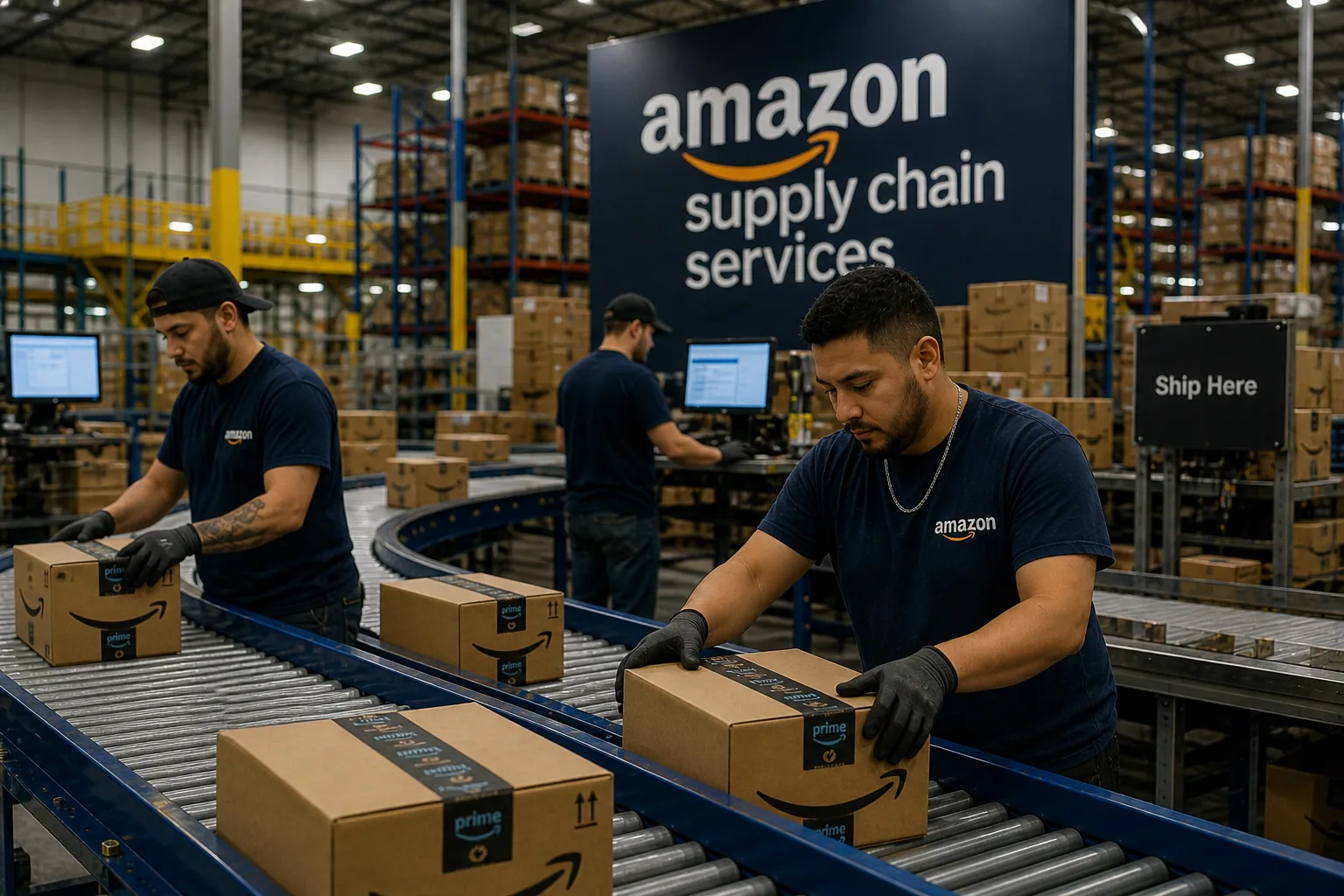
On May 4, 2026, Amazon announced Amazon Supply Chain Services (ASCS), opening its freight, distribution, fulfillment, and parcel shipping network to any business, including non-Amazon sellers. The same infrastructure that helped Amazon promise two-day delivery to hundreds of millions of customers is now available to a manufacturer in Ohio, a DTC apparel brand in Los Angeles, or an industrial supplier shipping to construction sites across the country.
The reaction from markets was immediate. The Dow Jones Transportation Average fell into bear market territory the same day, with FedEx, UPS, GXO, and C.H. Robinson all taking significant hits. That alone tells you how seriously the logistics industry is reading this move.
But before shippers rush to consolidate everything under Amazon, and before 3PL operators panic, it is worth taking a clear-eyed look at what ASCS actually includes, where it genuinely competes, and where independent 3PLs still hold ground that Amazon cannot easily take.
What Amazon Supply Chain Services actually is
According to Amazon's own announcement, ASCS packages several logistics capabilities into a single offering:
Freight: Amazon's transportation network, covering air, ground, and ocean movement of cargo
Warehousing and distribution: Bulk storage and distribution through Amazon's fulfillment center network
Parcel shipping: Last-mile delivery through Amazon's own carrier network, seven days a week
Cross-border logistics: International freight and customs clearance support
Multi-channel fulfillment: The ability to fulfill orders from a single inventory pool across multiple sales channels, not just Amazon.com
Amazon frames this as an "AWS moment" for logistics. Peter Larsen, VP of Amazon Supply Chain Services, stated that Amazon is bringing the same infrastructure it built for its own operations to businesses everywhere, much like it did when it turned its internal cloud infrastructure into Amazon Web Services.
The AWS comparison is not accidental. AWS currently generates over $100 billion in annual revenue. Amazon is clearly hoping ASCS can grow into a comparable business inside a global 3PL market estimated at $1.3 trillion.
Who is already using it
The launch was not just a press release. Amazon announced that Procter & Gamble, 3M, Lands' End, and American Eagle Outfitters are among the first brands to sign on. These are not small pilots.
P&G is using Amazon's freight to transport raw materials to production facilities and move finished goods through its distribution network. 3M is moving products from manufacturing sites to distribution centers worldwide. Lands' End is using a unified inventory pool to fulfill orders across multiple sales channels. American Eagle is using Amazon's parcel network to ship online orders directly to customers from its own websites.
That mix of brands, a consumer goods conglomerate, an industrial manufacturer, a heritage apparel company, and a fast-fashion retailer, signals that Amazon is not positioning ASCS as a niche service for e-commerce startups. They are going after the full stack of commercial shipping.
Why this matters for shippers right now
For years, Amazon-scale logistics was practically inaccessible to brands outside the Amazon marketplace. If you were not selling on Amazon.com and using FBA, you had no path to their delivery speed, their carrier density, or their geographic reach, short of building it yourself or stitching together multiple providers.
TechCrunch noted that Amazon is essentially turning a service that hundreds of thousands of independent third-party sellers have used into a much broader commercial offering. That shift has real implications for ecommerce brands and SMBs evaluating their fulfillment strategy.
If your current 3PL is managing standard pick-and-pack for orders that ship to residential addresses in major metros, ASCS is a direct and credible alternative worth pricing out. Amazon's carrier density and delivery speed are genuinely hard to match on a cost-per-shipment basis at scale.
But "standard fulfillment at scale" describes a narrow slice of what most shippers actually need.
What ASCS cannot do
Here is where it gets practical. Amazon's network is optimized for a particular kind of freight: consumer packaged goods, standard-size parcels, and retail inventory that moves at high volume. That optimization is also its ceiling.
ASCS does not offer:
Specialty handling: Kitting and assembly, hazmat storage and shipping, cold chain and temperature-controlled fulfillment, and controlled substance handling all require certifications and facility infrastructure that Amazon's general fulfillment centers are not built for. A brand shipping lithium batteries or refrigerated nutraceuticals needs a 3PL with the right licensing and physical setup.
Bonded warehousing: Importers who defer customs duties on goods stored for re-export or further processing need bonded warehouse access. That is a specific regulatory category, and ASCS does not operate in it.
Niche certifications: FDA-registered facilities, USDA compliance, cGMP-certified environments, and pharmaceutical distribution requirements, which are all handled by specialized 3PLs who have built their operations around specific regulatory environments.
Relationship-driven sourcing and procurement support: Smaller brands often rely on 3PL partners to help coordinate supplier relationships, manage inbound freight from overseas factories, and provide operational guidance. ASCS is a logistics network, not a managed service.
Regional and rural reach: Amazon's network is dense in major population centers. Shippers who serve rural markets, regional distributors, or industrial buyers in secondary and tertiary markets often find that independent 3PLs with strategically placed warehouse storage space give them better last-mile economics than a national carrier network optimized for residential delivery.
What this means for 3PLs
The honest read here is that ASCS does not threaten all 3PLs equally. It threatens one specific type: the generic mid-tier operator running standard fulfillment with no clear point of differentiation.
If your 3PL pitch is "we pick, pack, and ship," and that is the whole story, Amazon just entered your market with more technology, more carrier relationships, and a brand that shippers already trust. That is a pressure that was coming regardless, and ASCS just accelerated the timeline.
Operators who have built real capabilities around specialty handling, complex workflows, niche certifications, or specific verticals are in a different position. Their value is not replaceable by a general-purpose logistics network, no matter how large. A 3PL e-commerce partner who specializes in DTC apparel with custom packaging, branded inserts, and returns processing built around a specific brand's needs offers something ASCS structurally cannot.
The same goes for regional specialists. A 3PL in New Jersey with deep carrier relationships for Mid-Atlantic distribution, or a 3PL in California with drayage expertise and port-adjacent storage, delivers geographic and operational context that a national network cannot replicate from a central fulfillment hub.
Should shippers use ASCS, stick with their 3PL, or do both?
The answer depends entirely on what you are shipping and how.
Use ASCS if you are moving high-volume, standard SKUs through major residential markets and your current fulfillment costs are not competitive. Amazon's scale and delivery reliability make it a legitimate option for that use case.
Stick with a specialized 3PL if your products require temperature control, hazmat handling, kitting, custom packaging, regulatory compliance, or any workflow that goes beyond standard pick-and-pack. No amount of Amazon scale changes the fact that you need purpose-fit infrastructure for those needs.
Use both if you have a mixed product catalog. Some brands are already running high-velocity standard SKUs through Amazon's network while routing specialty or high-touch items through independent 3PLs who are set up for those requirements. That hybrid approach is not a compromise. For many shippers, it is the most rational structure.
The uncertainty shippers feel right now, about whether to consolidate everything under one provider or maintain flexibility with multiple partners, is understandable. But consolidation for its own sake tends to create fragility. The goal is fit, not simplicity.
Where independent 3PLs still win
The 3PL market is not monolithic, and Amazon is not trying to serve all of it. The operators who will hold their ground over the next few years share some common traits:
They have built genuine vertical expertise, whether in food and beverage, automotive parts, healthcare, or another category with specific handling requirements. They offer e-commerce warehouse solutions that include value-added services, not just storage and shipping. They provide flexibility that a national network cannot, including month-to-month warehouse rental arrangements for brands that need to scale without long-term lease commitments. And they compete on service quality and operational transparency rather than on price alone.
The top third-party logistics companies that have invested in technology, certifications, and vertical focus are not particularly worried about ASCS. The ones that should be are the ones that have been competing primarily on price with no real differentiation to fall back on.
Finding the right partner for your fulfillment needs
Amazon entering the open 3PL market is a forcing function for everyone. Shippers should take this as an occasion to honestly evaluate whether their current fulfillment setup is purpose-fit or just familiar. And 3PLs should take it as a signal to sharpen whatever genuinely differentiates them.
If you are an e-commerce brand or SMB shipper trying to figure out whether ASCS makes sense for your operation, whether you need a specialized 3PL, or how to structure a hybrid approach, the first step is comparing actual options. The right fulfillment partner is not the biggest one. It is the one that actually fits what you ship.