The short answer is that the fastest, most cost-effective way to find temporary warehousing in Canada for peak season is to partner with a third-party logistics provider (3PL) through a 3PL warehousing marketplace. Leasing space directly sounds straightforward, but it comes with a long tail of problems that most brands don't account for until they're already behind.
Why Leasing Space on Your Own Rarely Works for Seasonal Needs
When volume spikes arrive, the instinct for a lot of ecommerce brands and SMB owners is to look for warehouse space for rent near them. That means a short-term lease, a sublease, or maybe a shared warehouse space arrangement. It feels like the path of least resistance.
The problem is that space is only part of what you need. A bare lease gets you four walls and a loading dock. It doesn't come with racking, forklifts, packing stations, or people who know how to run a pick-and-pack operation during a period when Canadian retailers see order volumes increase 300 - 400% over their baseline. Sourcing and managing all of that yourself, under a time crunch, is a different project entirely.
A 3PL already has those things. When you're renting a building, you're buying into an operating system.
The Lead Time Most Brands Ignore
Here's where brands get caught off guard. The timeline from "we need capacity" to "we're operational" is longer than almost anyone assumes.
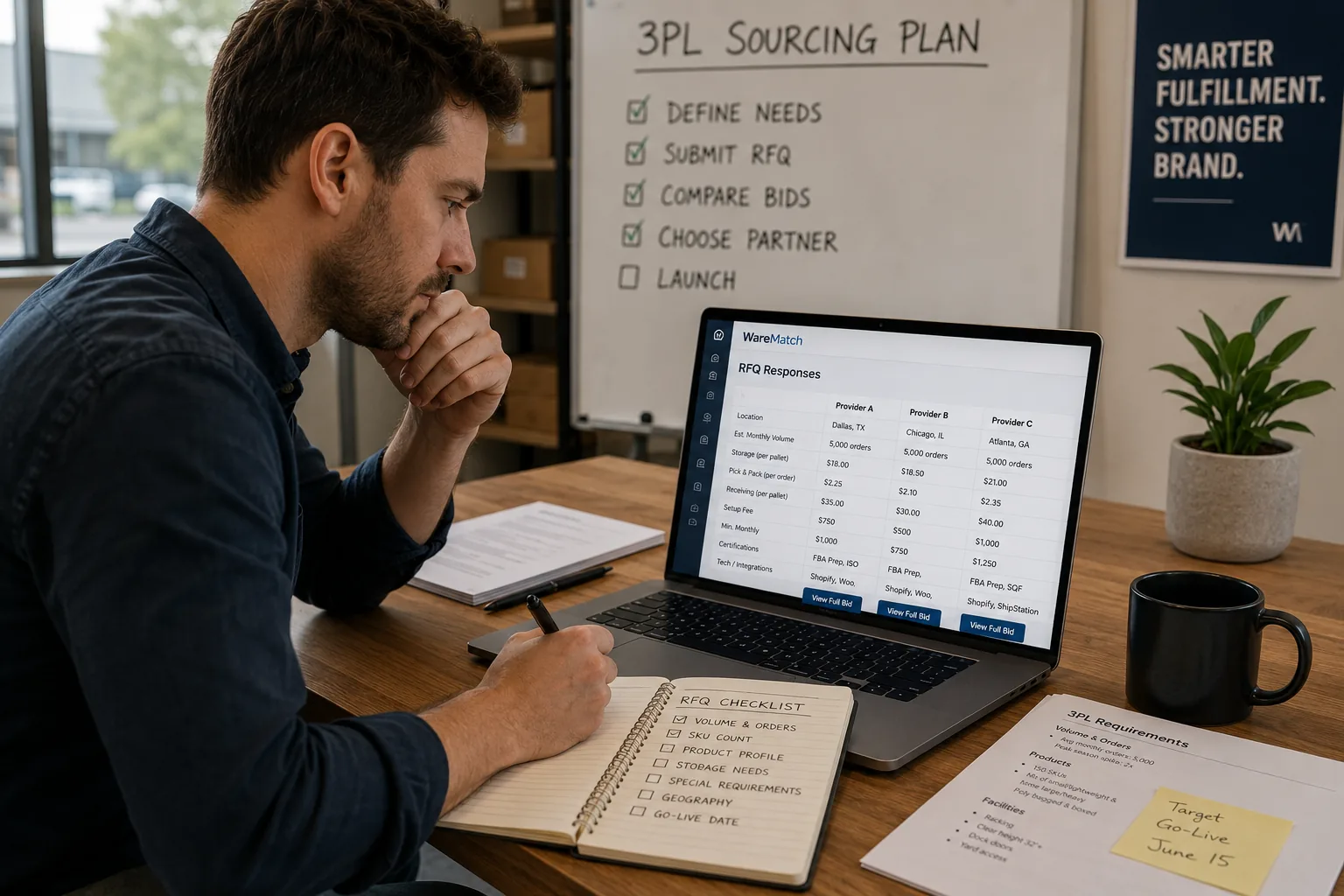
The 3PL sourcing process alone, including issuing an RFQ, evaluating providers, doing site visits, and negotiating terms, takes roughly 4–8 weeks. Once you sign, onboarding a new brand onto a 3PL platform takes an average of 8–12 weeks, and that stretches further if you're running multiple sales channels, an ERP like NetSuite, or marketplace fulfillment programs.
Stack those together and you're looking at a minimum of 12–20 weeks from your first inquiry to being fully operational. A brand that starts this process in August for a Q4 peak is not going to make it. Industry data backs this up: preparation for peak season should begin in Q1, with major infrastructure decisions made no later than Q2, and 3PL partnerships often requiring 6+ months of lead time.
The brands that handled Q4 2025 well started planning in January.
What to Figure out before You Start Sourcing
Before you submit an RFQ or reach out to a single 3PL, you need to have a clear picture of what you actually need. Providers will ask you these questions, so it's better to have the answers ready than to lose weeks going back and forth.
Space and volume requirements. How many SKUs are you managing? What's your estimated inbound volume per week at peak? Do you need ambient, refrigerated, or temperature-controlled storage? If you don't know your cubic footage requirements, work backward from your projected order volume and average order size.
Handling requirements. Are you shipping direct-to-consumer, B2B, or both? Do you need kitting, custom packaging, or returns processing? A provider that's a strong fit for DTC fulfillment may not be built for pallet-in, pallet-out retail replenishment, and vice versa.
Contract flexibility. This one matters more than most brands realize. Some 3PLs quote fixed-space agreements, meaning you pay for a defined square footage whether you use it or not. Others price based on actual usage, which means storage by the pallet, fulfillment by the order. For seasonal capacity, variable pricing almost always makes more sense, since you're not trying to support that volume year-round. Ask upfront what the pricing model looks like, and whether there are minimums that apply in off-peak months.
Why Timing Gives You Leverage, and Why Waiting Takes It Away
Canada's industrial market has started tightening again. National industrial vacancy dropped to 3.5% in Q1 2026, the first national decline since 2022, according to Colliers International. In the GTA specifically, vacancy sat at 4.1% in Q4 2025, with availability at 5.6%.
What that means practically: the available space exists on paper, but the subset of it that's actually useful for seasonal e-commerce (i.e., brand-flexible terms, right-sized, with existing labor and equipment) is much smaller. And 3PLs with genuine capacity for short-term clients fill up fast.
Average net rents closed 2024 at $15.11 per sq. ft., down 4.5% year-over-year, but the rate of decline slowed to just 0.6% per quarter through 2025. The window for pricing leverage is narrower than it was a year ago.
Brands that engage 3PLs in Q2 for Q4 capacity have real negotiating room: lower rates, better contract terms, more location optionality. Brands that start in Q3 are negotiating from a position of urgency, and providers know it.
Two Misconceptions Worth Clearing up
"3PLs are only for large companies." This isn't accurate. A good 3PL can work with brands shipping hundreds of orders per month, not just thousands. Variable pricing models (e.g. storage per pallet, fulfillment per order) make the economics work at smaller volumes. The question isn't whether you're big enough; it's whether your volume and margins support outsourcing fulfillment at all.
"I only need basic storage space." Storage is rarely the only thing that actually needs to happen. During peak, you need receiving, putaway, picking, packing, labeling, shipping, and often returns processing running at the same time. Even if your operation is relatively simple, all of those functions need to be accounted for. A 3PL handles them as a package. A warehouse lease doesn't.
The Sourcing Process Is Where Brands Lose Time
One of the most common frustrations we hear from e-commerce brands is that the 3PL sourcing process is slow and opaque. You reach out to providers, wait days for responses, get back ballpark numbers with no real detail, go back and forth on requirements, and eventually realize you've been in "evaluation mode" for six weeks without a signed agreement.
A survey of 200 senior e-commerce leaders across the U.S., UK, and Canada found that 96% expect international order volumes to rise in Q4, but only 31% feel fully prepared to handle it. That gap is a sourcing infrastructure problem. Most brands don't have a fast, reliable way to find and vet 3PL partners.
That's the problem WareMatch is built to solve.
How WareMatch Fits into This
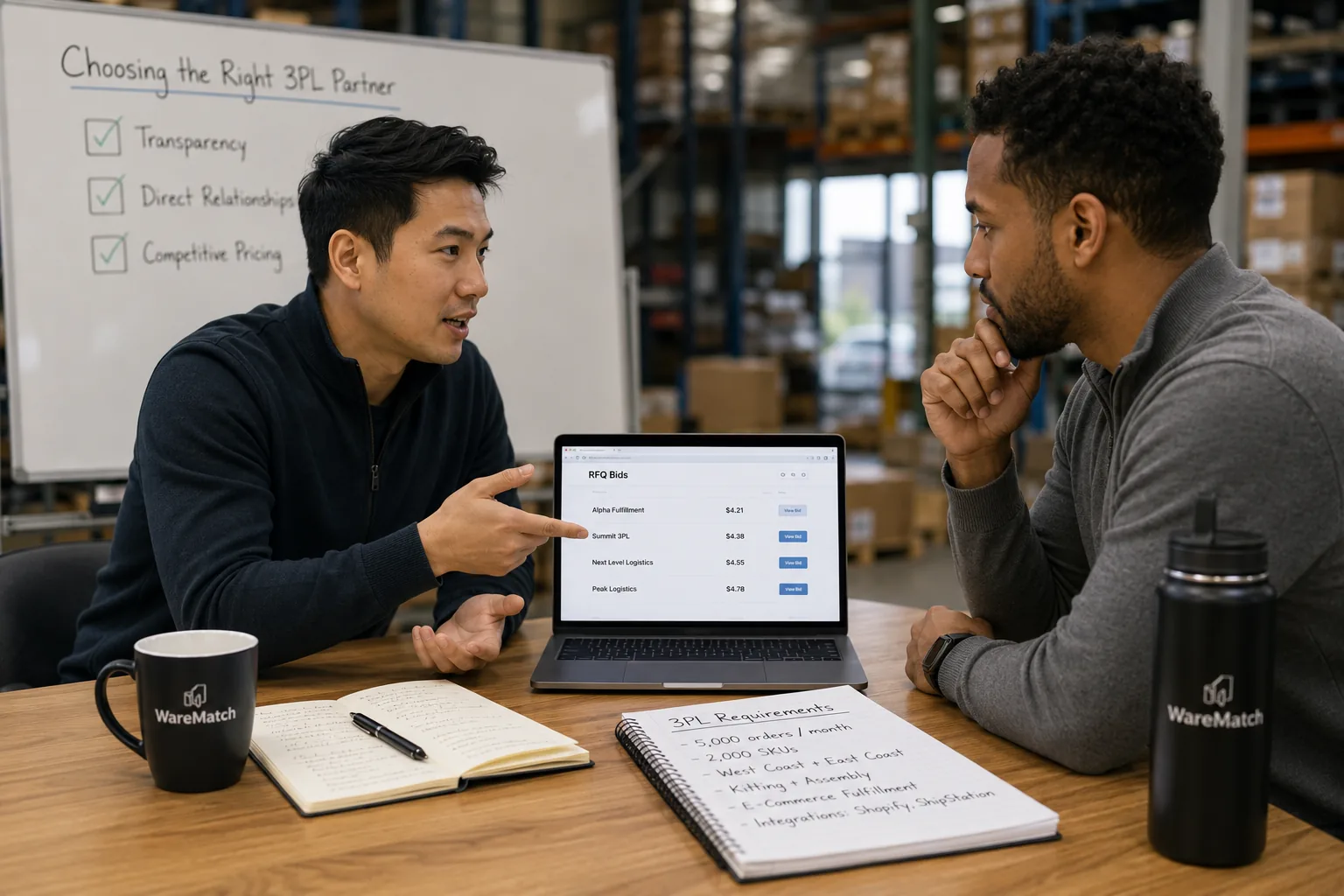
WareMatch is Canada's leading 3PL warehousing marketplace. Instead of cold-calling providers or spending weeks trying to find who actually has capacity in the right market, you submit a single RFQ and get matched with 3PLs that fit your requirements, such as location, handling capabilities, pricing model, and timeline.
The practical upside is speed. The sourcing phase that typically takes 4–8 weeks gets compressed, which matters when your operational window is already tighter than you'd like.
Whether you're an e-commerce brand planning for Q4, an SMB owner managing seasonal inventory, or a 3PL that's at capacity and needs to refer a client to a partner, WareMatch reduces the friction on both sides of the transaction.
The Practical Takeaway
If your peak season is Q4, your sourcing conversation should be happening now, in Q2. If you're planning for a summer peak, the same logic applies: the earlier you move, the more options you have on pricing, location, and contract terms.
Using a 3PL through a marketplace like WareMatch is not just faster than leasing space directly; it's operationally cleaner. You’ll be managing a service relationship. And when the season ends, you don't have a warehouse you don't need anymore.
Book a demo with WareMatch to see how the matching process works, or submit an RFQ directly to get connected with 3PLs that have capacity for your requirements.