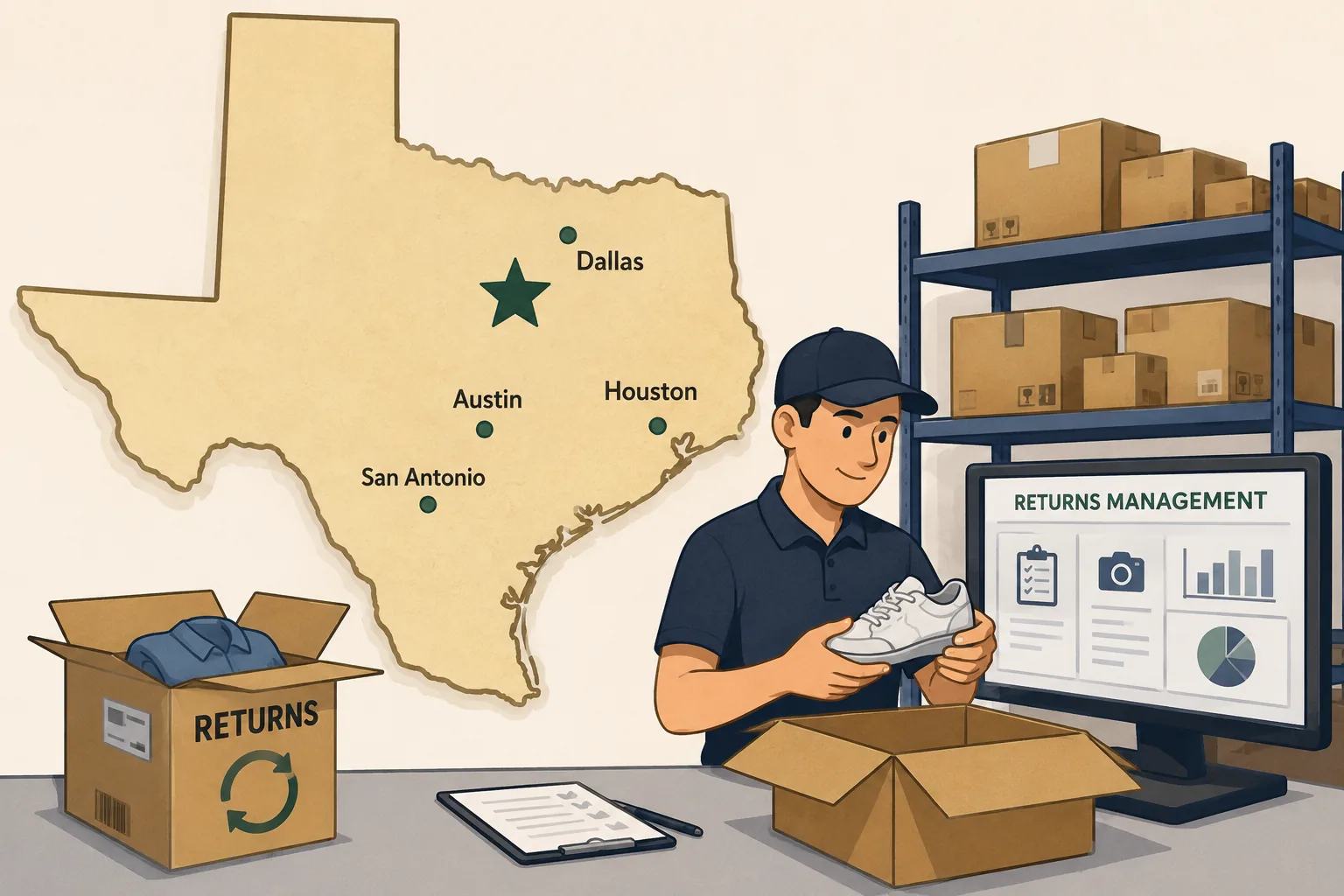
Returns are the part of e-commerce nobody budgets for correctly. A brand can nail its marketing and still bleed margin on reverse logistics if the wrong 3PL is opening those boxes. Texas has become one of the busiest e-commerce warehouse corridors in the country, largely because Dallas-Fort Worth sits within a day's drive of most major U.S. population centers and hosts one of the largest cargo airports in the world. That combination makes it a natural fit for returns processing, where speed back into inventory (or a fast decision to liquidate) is what actually protects margin.
Below are the top eight 3PL providers (in no particular order) with active Texas facilities on WareMatch, the marketplace that lets brands compare warehouse capacity, services, and pricing side by side instead of cold-calling operators one at a time. Every listing below links out to the full facility profile, where you can see photos, contact details, and submit a request for quote directly.
What does returns management actually include?
At a warehouse level, returns management usually covers receiving the item back, inspecting or photographing it, deciding whether it gets restocked, refurbished, or destroyed, and then updating inventory counts so the brand's storefront reflects reality. Some 3PLs handle this as a basic line item. Others build entire workflows around it, with reporting dashboards and disposition rules the brand sets in advance. The providers below span that range.
1. Iron Mountain – Haslet, TX
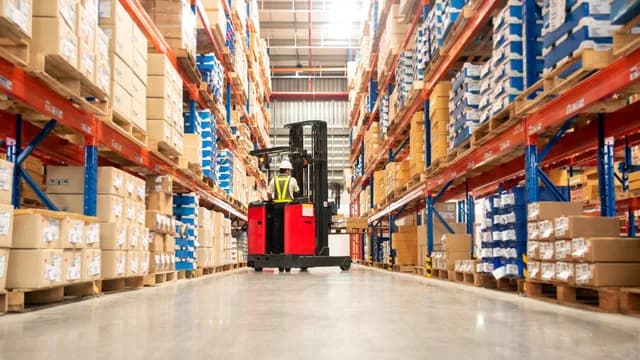
Iron Mountain's Haslet facility sits in the Alliance Texas planned community, a short drive from both Dallas and Fort Worth. The site runs 400,299 square feet with 58,266 pallet positions and 70 dock doors. Returns Processing is listed alongside Pick and Pack, Kitting & Assembly, and Cross-Docking, so a brand can route reverse logistics through the same team handling outbound fulfillment rather than a separate vendor. Iron Mountain also supports Amazon FBA prep and TikTok Shop fulfillment, which matters for brands managing returns across more than one sales channel.
2. Outpost – Dallas, TX (Walton Walker)
Outpost's DFW4 facility is a 73,200 square foot cross-dock site on a 27-acre lot with 154 dock doors, built for throughput rather than long-term storage. That layout is useful for brands whose returns volume needs to move fast, whether it's getting inspected inventory back onto shelves or consolidating freight for redistribution. Pricing starts at $2.10 per square foot per month on a hybrid 3PL-plus-sublease model, which gives growing brands room to scale space up without renegotiating a full lease.

3. eShipping – Arlington, TX
eShipping's Arlington warehouse runs 114,000 square feet with 20 dock doors and a 32-foot ceiling. The facility is food-grade and FDA registered, which opens the door to CPG and beverage brands that need stricter handling standards on returned goods. eShipping also runs its own in-house transportation management and customs brokerage, so returns that involve cross-border shipments do not require a third vendor in the loop.
4. Jorstin Warehousing and Distribution – Fort Worth, TX
Jorstin's Fort Worth site offers 100,000 square feet of bulk storage and racking, with 5,000 pallet positions and 22 dock doors. The warehouse runs on Extensiv, giving brands a WMS with prebuilt integrations to most major shopping carts, so returns data can sync back to a storefront without manual entry. Jorstin pairs this with an in-house brokerage division for brands that need both storage and freight support from one point of contact.
5. Barrett Distribution Centers – Forney, TX
Barrett's Forney facility is a 550,000 square foot concrete tilt-up building with a 36-foot clear height and 111 dock-high overhead doors. Its industry specialization list includes HAZMAT and food-grade goods alongside standard consumer products, making it one of the more flexible large-format sites in this group for brands with mixed or regulated SKUs. The cross-dock configuration and 273 parking spaces also support brands running high truck volume in and out.

6. Lecangs Logistics – Katy, TX
Lecangs' Katy warehouse is built specifically around "big and bulky" e-commerce fulfillment, with 714,568 square feet, 58,394 pallet positions, and 100 dock doors. Returns here include photo capture at intake plus a restock-or-destroy decision, with reporting sent back to the brand. Lecangs is FBA, Wayfair, and eBay enabled, and lists itself as a Top FedEx 50 customer, which is worth noting if parcel volume and carrier rates factor into your returns cost. New clients also get the first 30 days of storage free.

7. McCollister's – Coppell, TX
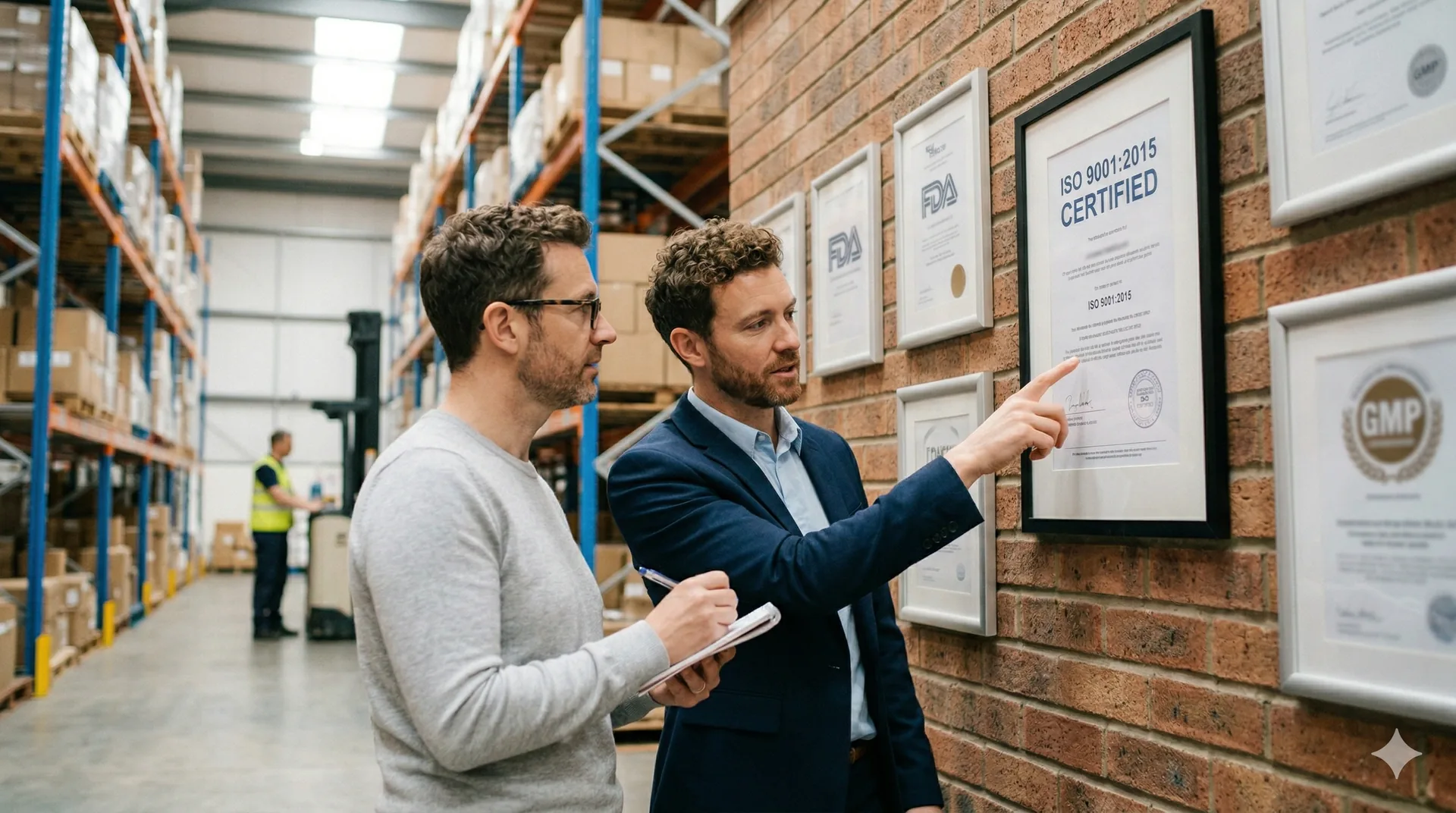
McCollister's Coppell facility covers 289,000 square feet between Dallas and Fort Worth, with 32 dock doors and ISO 9001:2015 certification. This site leans toward high-value and sensitive equipment, including technology hardware, medical devices, and fine art, with white-glove handling built into its returns and inbound processes. If your returns involve anything fragile or high-ticket rather than standard parcel goods, the certification and handling standards here are a differentiator worth checking against your own compliance needs.

8. FNS, Inc. – Euless / DFW Airport, TX
FNS's Dallas-area facility is a smaller, 49,000 square foot site positioned right next to DFW International Airport, with 17 dock doors and a dedicated CFS area for cargo consolidation. Built in 2020, the warehouse is a fit for brands whose returns and expedited shipments benefit from direct airport access rather than pure ground freight. FNS also runs 32 CCTV cameras across the site, which is worth noting if your returns include high-value or serialized goods that need tighter chain-of-custody tracking.

How to actually choose between them
Square footage and dock doors only tell part of the story. A few things worth checking before you commit to a returns partner:
Certifications that match your product: If you sell food, supplements, or anything FDA-adjacent, confirm the facility carries the right registration rather than assuming "warehouse" means "compliant." Our guide on what certifications brands should look for when selecting a 3PL walks through which ones actually matter versus which are just marketing.
How the quote is structured: Returns processing fees often hide in per-unit or per-hour line items that don't show up until month two. How to read a 3PL quote breaks down what each line typically means before you sign anything.
What you're actually agreeing to: Contract terms around minimum commitments and exit clauses matter more for returns-heavy operations than for straight storage. How to read a 3PL contract covers what to flag before signing.
Whether the provider fits your specific industry: A facility built for palletized freight isn't automatically right for a DTC apparel brand doing high SKU-count returns. How to find the right 3PL provider for your industry has a framework for narrowing the list.
Frequently asked questions
What is returns management in a 3PL warehouse?
Returns management is the process of receiving a returned item back into a warehouse, inspecting it, deciding whether it gets restocked, refurbished, or disposed of, and updating inventory records to reflect the outcome. Some providers add photo documentation and reporting on top of the basic workflow.
Why is Texas a strong location for e-commerce returns processing?
Dallas-Fort Worth combines central U.S. positioning with major highway access and a large cargo airport, which shortens transit time for both outbound shipments and returned goods moving back into inventory. That is part of why so many national 3PL and e-commerce warehouse operators, including several of the top third party logistics companies, maintain a footprint in the region.
How much does 3PL returns processing typically cost?
Pricing varies by provider and is usually billed per unit, per hour, or bundled into a broader fulfillment rate, as seen with Outpost's per-square-foot sublease pricing above. For a full breakdown of common fee structures, see what are the best ways to cut 3PL costs for small businesses.
Can I compare these providers before committing to one?
Yes. Each listing above links to a full facility profile on WareMatch, where you can view services, certifications, and submit a request for quote directly to that provider. If you'd rather see quotes from multiple 3PLs at once instead of contacting each one individually, submit a request through WareMatch and compare responses side by side.
Ready to see what returns processing actually costs for your volume? Submit a free RFQ on WareMatch and get matched with Texas 3PL providers, including the ones above, based on your specific product mix and order volume.