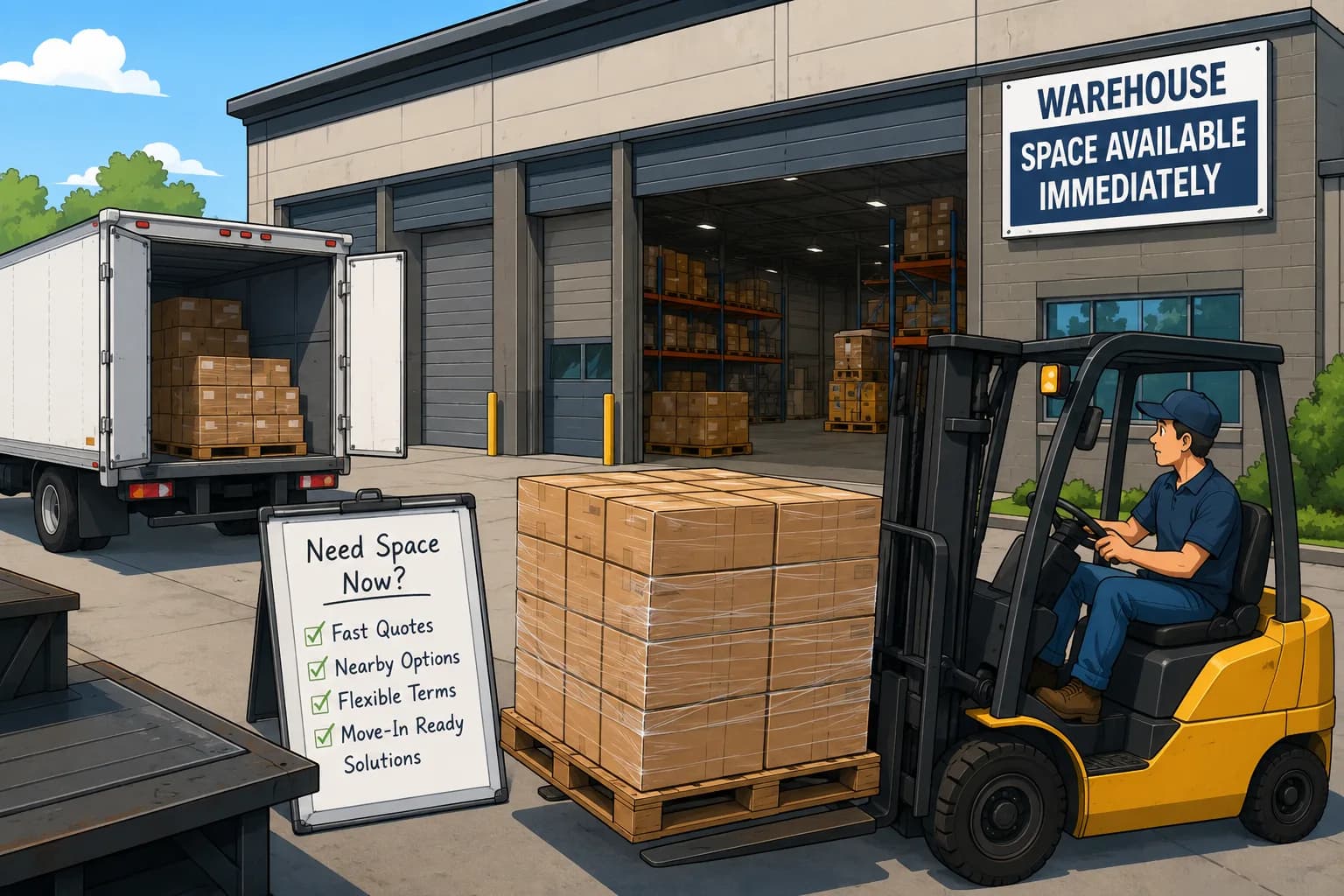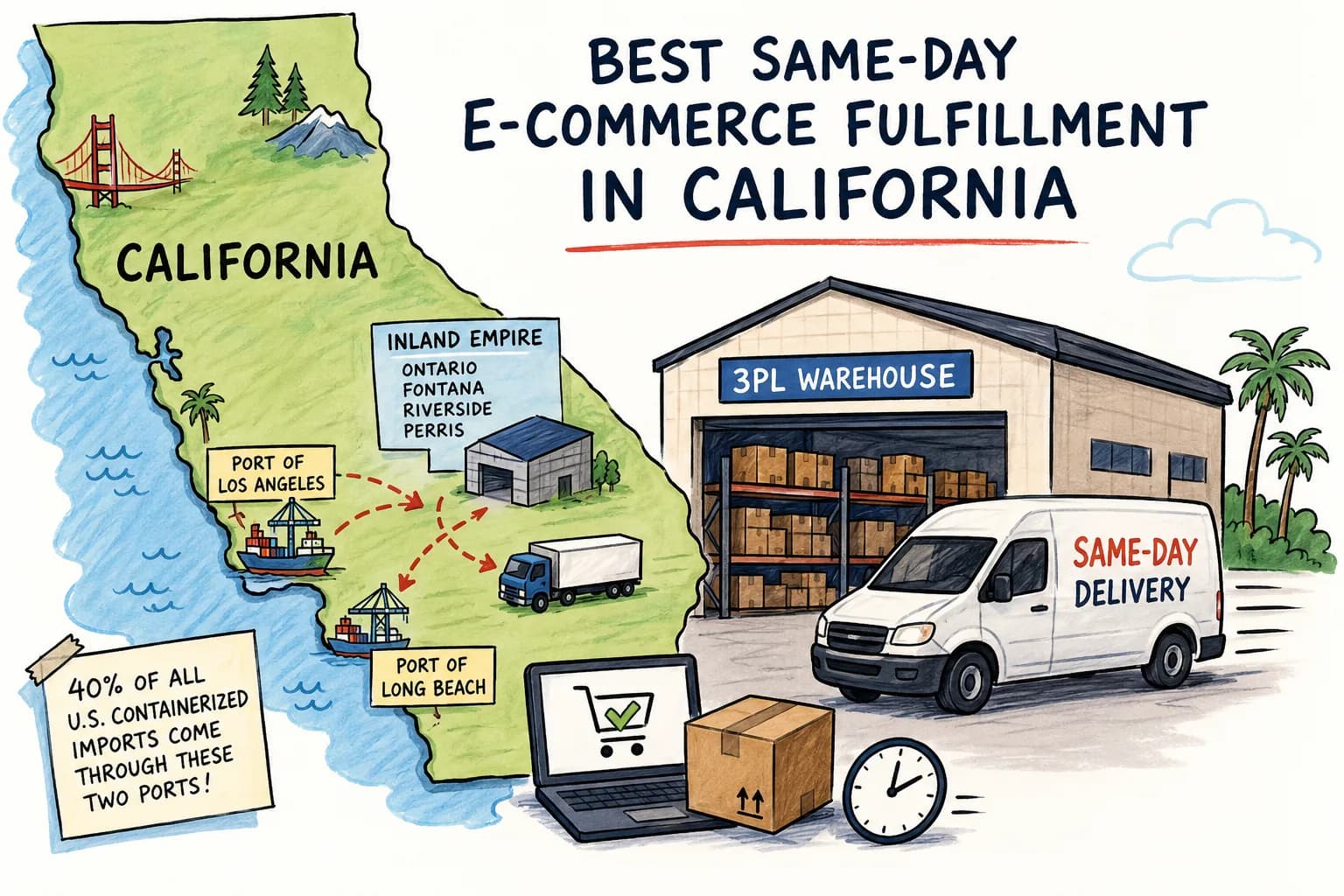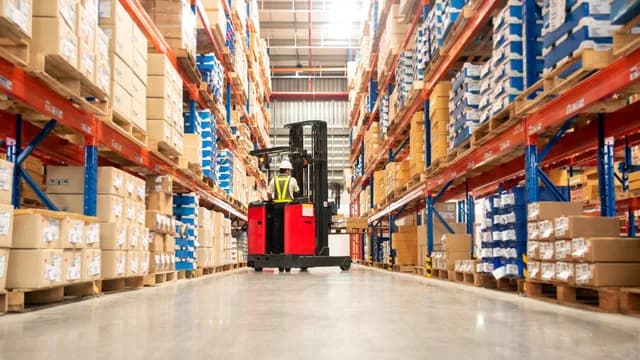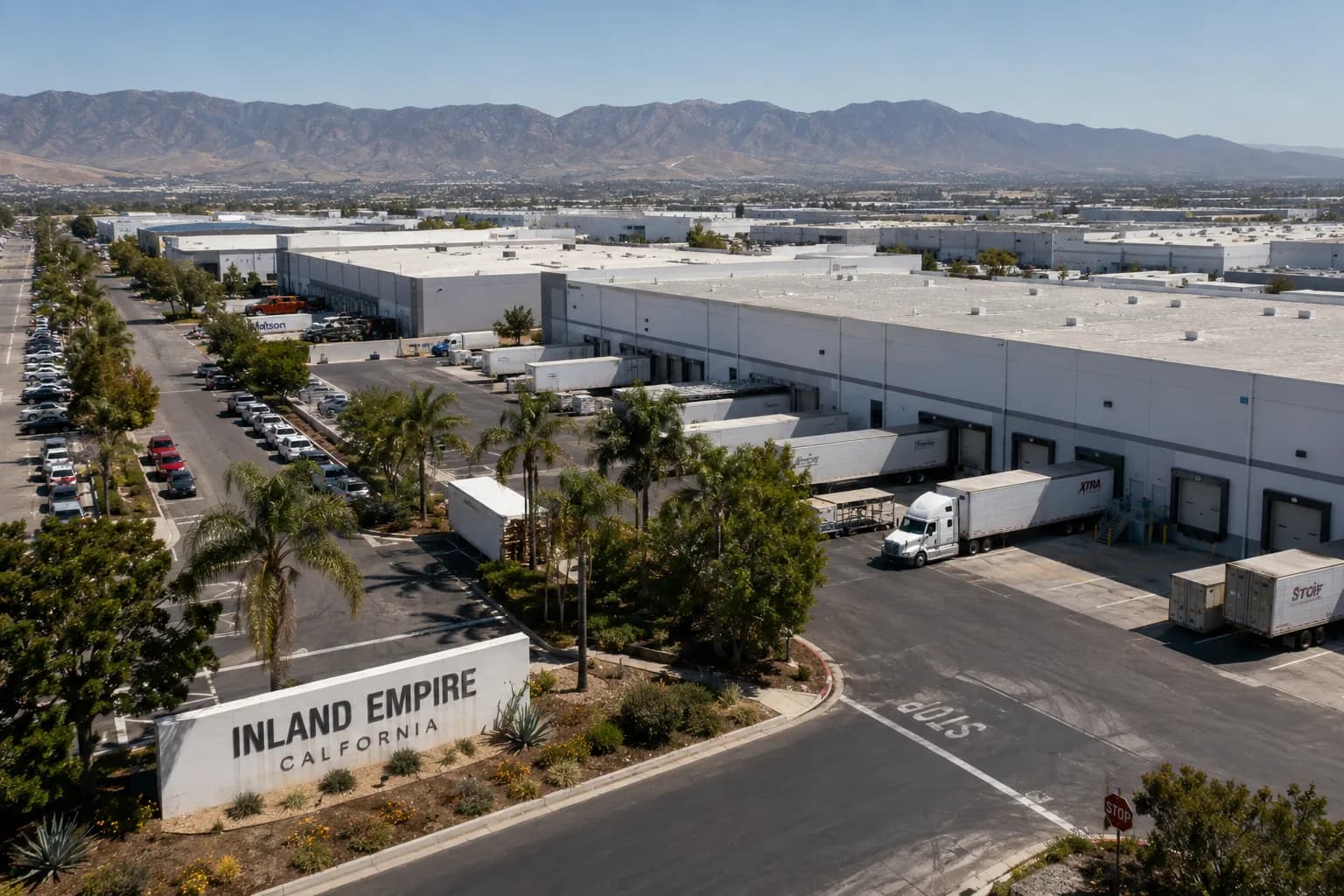
As of Q1 2026, the Inland Empire has more available warehouse space than at any point in the past decade. Vacancy sits at 8.5%, against a 10-year average of 4%, per Cushman & Wakefield. Average asking rents have dropped to around $1.00 PSF NNN, down from highs near $1.32, and sublease space is renting at roughly 25% below comparable direct space. For e-commerce brands and 3PL operators evaluating West Coast fulfillment, this is one of the better pricing windows in years.
The catch is that most shippers sourcing 3PL space don't know it, or aren't sure how to act on it.
Vacancy in the region hit 8.5% in Q1 2026, according to Cushman & Wakefield, against a 10-year average closer to 4%. That gap represents millions of square feet of available warehouse space that wasn't there two years ago. Sublease space alone now accounts for roughly 20% of what's on the market, and some of it is renting at 25% below comparable direct space.
For e-commerce brands and DTC operators evaluating West Coast fulfillment, this is the kind of pricing environment you wait years for. The question is whether you know how to use it.
What Happened to the Inland Empire Industrial Market?
The short version: the market built too much, too fast.
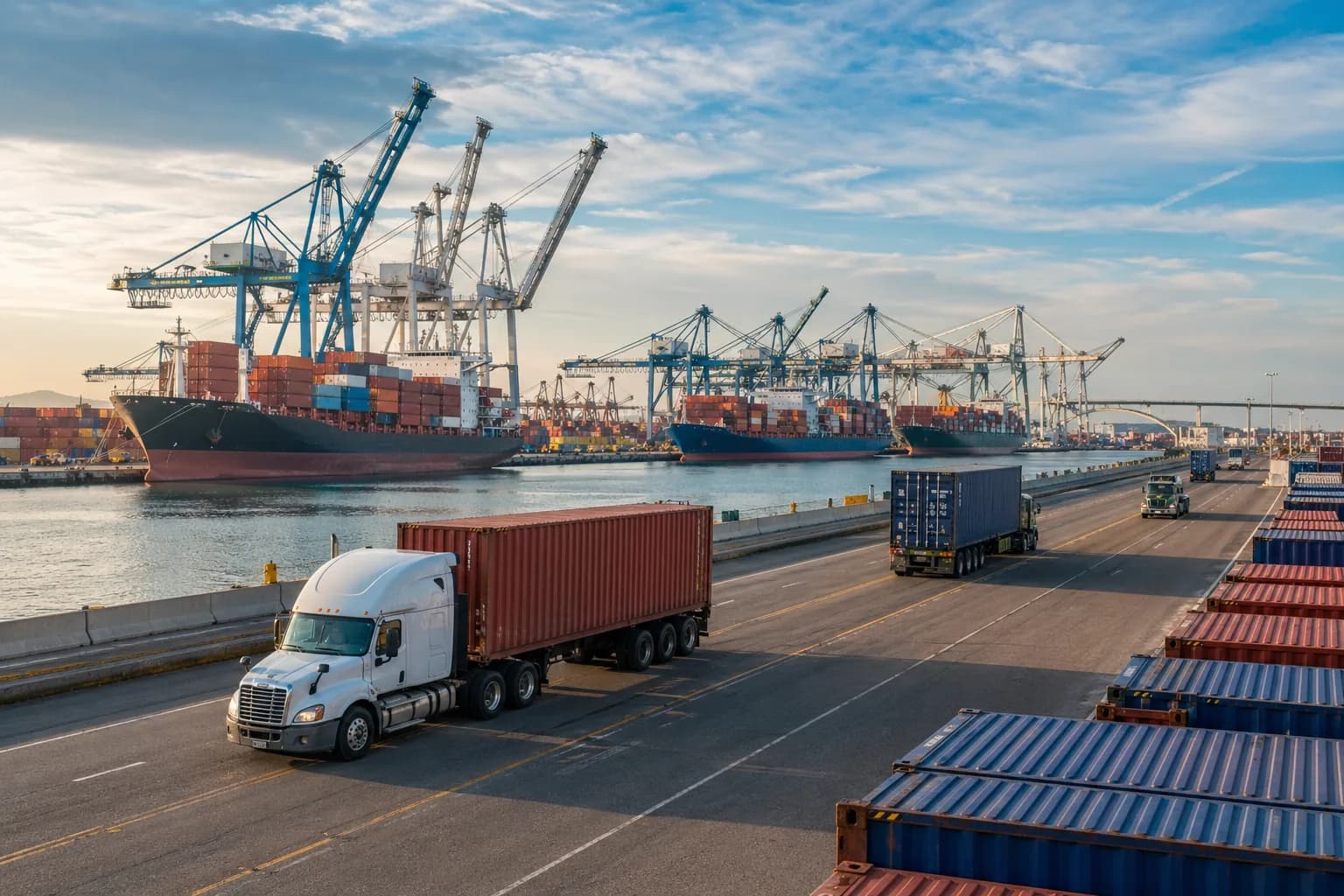
During the pandemic, demand for warehouse space in Southern California exploded. Retailers and importers scrambled to stockpile inventory after experiencing supply chain disruptions, and the Inland Empire became one of the hottest industrial markets in the country. Developers responded by breaking ground on speculative projects at a pace the market had never seen. At its peak in 2022, nearly 40 million square feet of industrial space was under development in the IE simultaneously.
Then demand normalized. Retailers worked through excess inventory. Port volumes softened. Import patterns shifted. And all that new construction kept delivering into a market that no longer needed it.
Large occupiers made the situation worse. Home Depot, Kohl's, and Forever 21 each vacated millions of square feet of big-box space, concentrating vacancy heavily in the 250,000 to 500,000 SF range. That has put downward pressure on mid-sized 3PL pricing across the board, which is good news for shippers who use third-party logistics providers rather than leasing space directly.
What Does This Mean If You're Sourcing 3PL Space?
A few things are true at the same time right now.
3PLs are still the most active occupiers in the IE. They signed 38 of the top 100 industrial leases nationally in 2025, which means there is real, active provider supply in the market. These providers are competing for clients in a way they simply weren't during 2021 and 2022, when space was scarce and providers could be selective.
Landlords are offering concessions, such as free rent periods, tenant improvement allowances, that haven't been common since before the pandemic. Those savings flow downstream. A 3PL operating out of space it secured at today's rates can price its services more competitively than one locked into a lease signed at the 2022 peak.
Sublease space is where the most aggressive pricing is. If your 3PL is operating out of a sublet, you're likely seeing rates that reflect roughly a 25% discount to what direct tenants are paying. That's real money over the course of a year.
A Quick Sub-market Breakdown
Not all of the Inland Empire is the same, and the differences matter when you're evaluating providers.
Ontario and Fontana drive most of the absorption in the region since they're the closest to LA ports and tend to attract larger, more established 3PLs with strong throughput volume.
Rancho Cucamonga and Jurupa Valley skew toward mid-sized operations. If you're an e-commerce brand shipping a few hundred to a few thousand orders per day, you're more likely to find the right-sized 3PL in these sub-markets than in the big-box corridors.
Eastern IE has the most distress and the lowest rents right now. Per Kidder Mathews' Q4 2025 report, availability in some eastern sub-markets is well above the regional average. If cost per square foot is your primary driver and you're not dependent on proximity to the Port of Long Beach, this is worth looking at.
The Part Most Shippers Get Wrong
Here's where the opportunity gets wasted.
Most brands don't track IE sub-market vacancy data. They find a 3PL through a referral, run a Google search for warehouse storage near me, and take whatever rate they're quoted because they have no frame of reference for what the market actually looks like. In a neutral market, that's a minor inefficiency. In a market where available warehouse space has roughly doubled relative to its 10-year average, it's leaving real money on the table.
There are a few specific misconceptions worth addressing:
"The IE is always tight." It was, for a long time. That's no longer the case. The availability rate is now sitting at 12%, according to Q1 2026 data from Cushman & Wakefield. Shippers who are still operating as if they're in a 2021 negotiating environment are almost certainly overpaying.
"More vacancies mean lower service quality." Vacancy is a real estate condition, not an operations signal. A 3PL in a building with lower occupancy costs can pass savings along to clients. The quality of their pick-and-pack operation, their WMS, and their carrier relationships has nothing to do with how much space is sitting empty in their sub-market.
"I should stick with whom I know." The market has shifted enough that re-shopping is worth it. If you set up your current 3PL arrangement in 2021 or 2022, you were negotiating at the worst possible time. Getting quotes today, from multiple providers, across multiple sub-markets, is a straightforward way to find out whether you're still on a fair deal.
The Window Is Real, And It Won't Stay Open Indefinitely
GlobeSt noted in Q1 2025 that industrial demand is beginning to catch up to supply in the IE. Absorption is picking back up in Ontario and Fontana. The concessions landlords are offering today are a response to a supply correction that is already working its way through the market. When vacancy tightens again, the negotiating leverage shifts back to providers.
This is a shipper's market right now. Not a provider's market. If you're evaluating 3PL space in California, or looking for flexible month-to-month warehouse rental options while tariff uncertainty plays out, the current window in the Inland Empire is worth acting on.
How WareMatch Fits in
The core problem isn't that the opportunity doesn't exist. It's that most shippers have no way to see it clearly.
You can't easily compare providers by location, capability, and pricing simultaneously. You don't know what the going rate is in Fontana versus San Bernardino versus Rancho Cucamonga. You don't know which 3PLs have sublease-backed pricing and which are locked into 2022-era leases. You're flying blind in a market where visibility would directly translate to savings.
WareMatch is built to close that gap. You can browse 3PL providers in the Inland Empire, compare them against your actual requirements, and submit an RFQ through WareMatch Connect to get competitive quotes, without cold-calling providers one by one and hoping someone calls back.
The market data is pointing in one direction. The question is whether you have the tools to act on it.
Browse 3PL providers in the Inland Empire on WareMatch or submit your project needs through WareMatch Connect to see what today's market rates actually look like for your volume and location requirements.