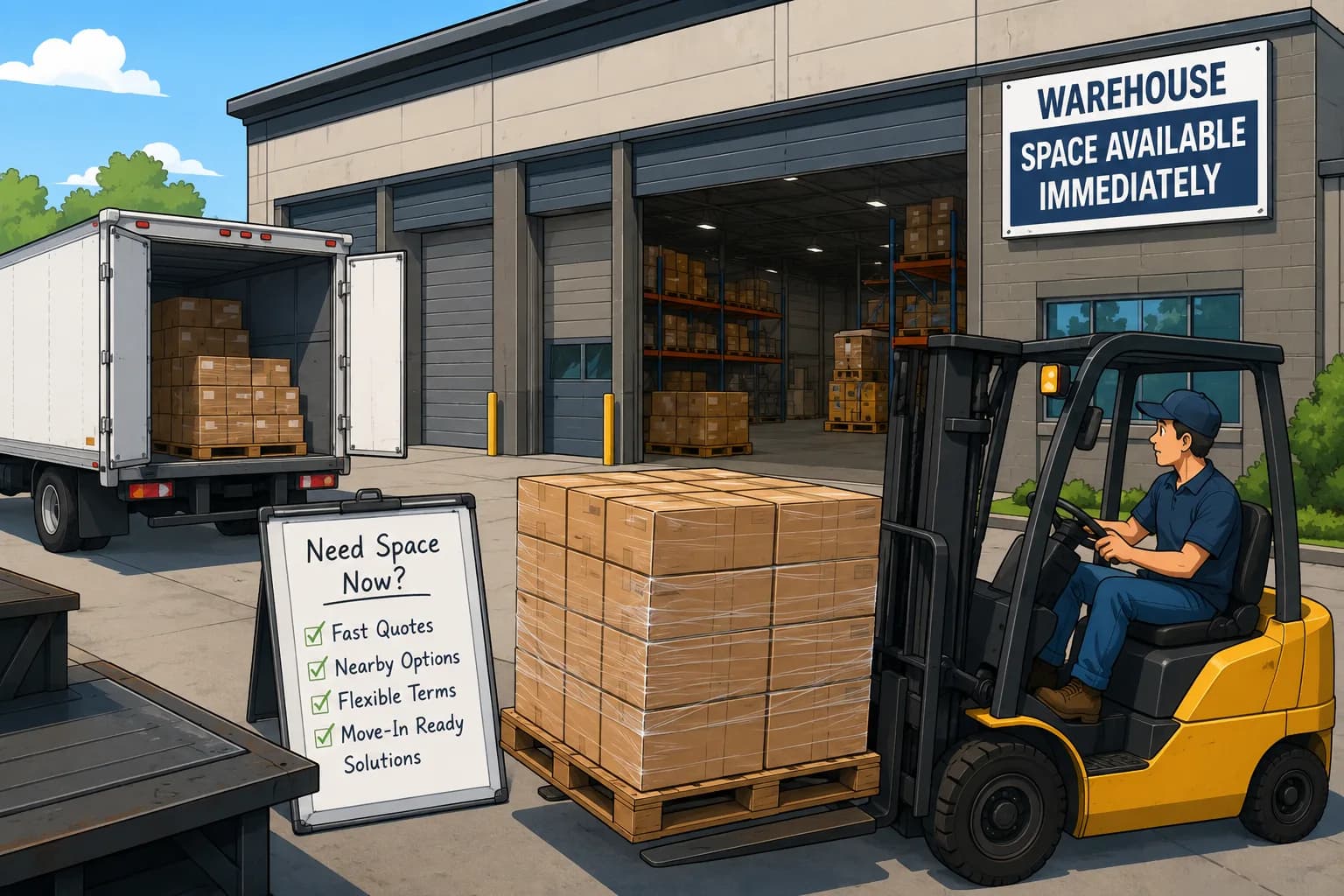
Your inventory just doubled. Your lease is ending in six weeks. A supplier missed a shipment window and now you have 40 pallets sitting on a dock with nowhere to go. If any of that sounds familiar, you already know the real problem isn't demand. It's speed.
Business needs shift fast right now. A seasonal spike, a new retail partner, a supply chain hiccup, and suddenly you need warehouse space near you this month, not next quarter. The traditional way of sourcing a warehouse wasn't built for that timeline, and it shows.
The process is harder than it should be
Ask anyone who has sourced warehouse space the traditional way and they'll tell you the same thing: it's slow, opaque, and full of dead ends. You call five providers. Two never call back. One quotes a price that changes after you ask about square footage. Another can't take you for 90 days. By the time you get a real answer, your original need has already changed again.
Part of the problem is a common assumption: that any warehouse with open square footage can take you on right away. That's rarely true. Space, staffing, dock availability, and existing commitments all affect whether a facility can actually move fast, and most listings don't tell you that up front.
Start with what you actually need
Before you contact anyone, get specific about your requirements. Square footage matters, but so does ceiling height, dock door count, temperature control, rack configuration, and proximity to your customer base or ports. A 3PL that's a great fit for palletized dry goods isn't necessarily equipped for cold storage or fragile electronics.
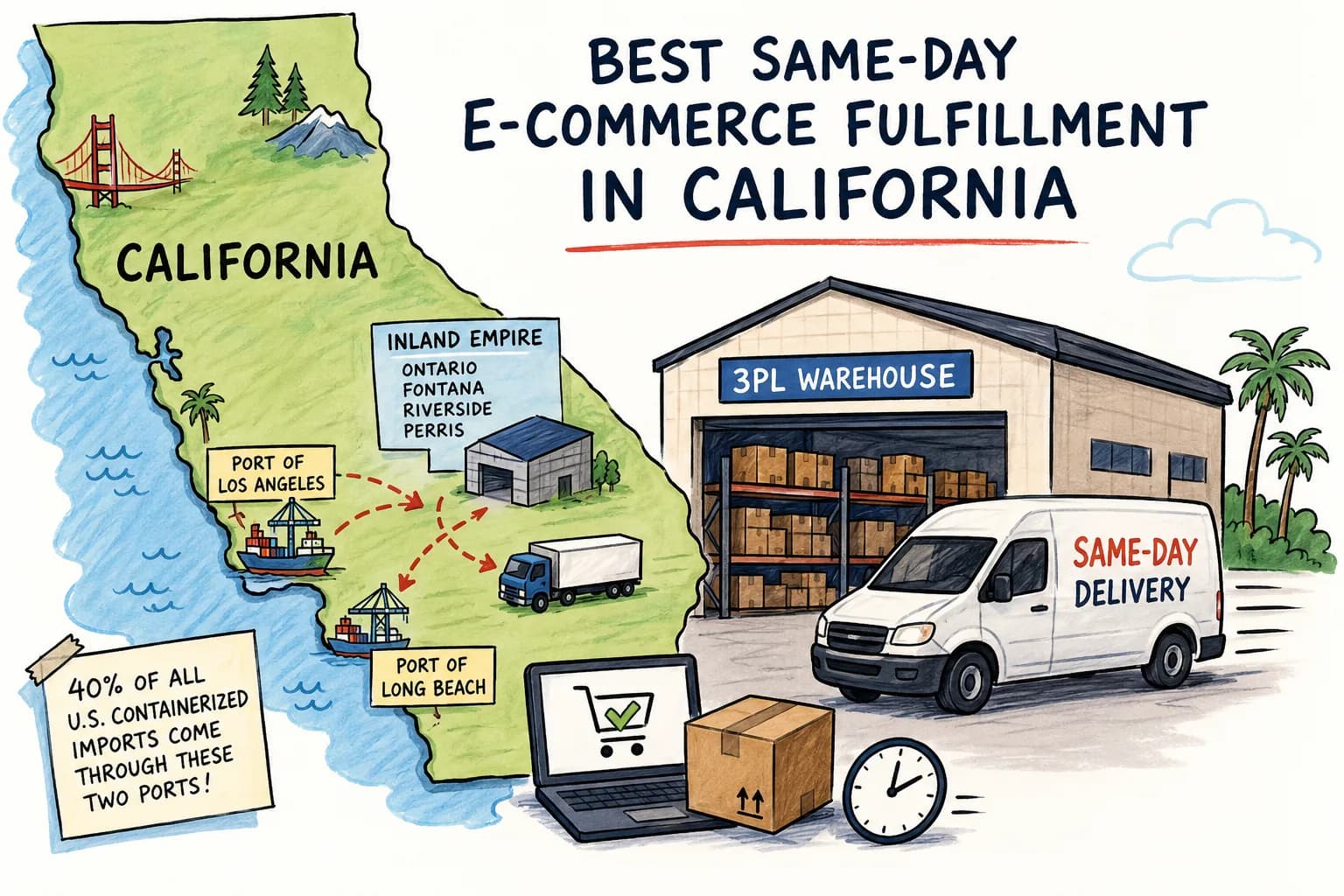
The more precise you are here, the fewer wasted calls you'll make later. Vague requests like "need storage space" produce vague answers. Specific requests like "12,000 square feet, 24-foot clear height, five dock doors, near the Port of Long Beach" produce real quotes.
Know your timeline and say it out loud
Timeline is the piece that gets glossed over most often, and it's the one that determines whether a warehouse is even a candidate. If you need space in two weeks, a facility that's finalizing a build-out or waiting on a lease to expire isn't a match, no matter how good the rate looks.
Say your timeline plainly and early. "I need to be operational by the 15th" filters out providers who can't meet it before you've invested time in a conversation that was never going to work.
Give providers the full picture
Sourcing moves faster when you hand over complete information the first time instead of trickling it out over several calls. That means product type, packaging, pallet count or unit volume, expected inbound and outbound frequency, any handling requirements, and your budget range. Warehouse operators who receive a complete request can respond with an accurate quote much faster than one built on partial information, which shortens the entire timeline from inquiry to move-in.
Be upfront about your own lead times too
This works both directions. If you know your goods won't actually arrive for three weeks, or if you're still finalizing a supplier contract, say so. Warehouses plan their available capacity around real commitments, and transparency about your own timeline helps a provider tell you honestly whether they can accommodate you, instead of giving an optimistic answer that falls apart later.
Where WareMatch fits into all of this
This is the part of the process that's historically eaten the most time: finding the right providers to even talk to. WareMatch is a warehousing marketplace built specifically for this, letting businesses browse, compare, and book warehouse space directly on one platform instead of cold-calling one facility at a time.
Instead of chasing down providers individually, you submit your requirements once. WareMatch matches you with verified 3PL warehouses that fit your specific needs, based on the details you provide, and returns a tailored list of options you can actually compare side by side. It functions the way a booking platform does for travel: browse real listings, compare pricing and capabilities, and connect directly with the provider that fits, rather than working blind through referrals and cold outreach.
That structure directly addresses the two biggest points above. Because every provider on the platform can see your full requirements up front, you're not stuck repeating your specs on five different calls. And because the platform is built around matching, not guessing, you're far less likely to land on a provider who can't actually meet your timeline.
Frequently asked questions
What's the fastest way to find warehouse space? Define your exact requirements (size, dock access, temperature control, location) and your timeline before you reach out to anyone. Then use a marketplace like WareMatch to submit that information once and get matched with warehouses that can actually meet it, instead of contacting providers one at a time.
Can any warehouse take on new tenants immediately? No. Availability depends on a facility's current commitments, staffing, and dock capacity, not just its listed square footage. A warehouse can have open space and still be weeks away from being able to onboard you.
What information should I have ready before contacting a warehouse or 3PL? Product type and packaging, pallet count or unit volume, inbound and outbound frequency, handling or storage requirements (like temperature control), budget range, and your target move-in date. The more complete this is, the faster you'll get an accurate quote.
The bottom line
Sourcing warehouse space fast isn't about luck or knowing the right person. It's about knowing your requirements, being honest about timelines on both sides, and using a process built for speed instead of one built for a slower era of logistics. WareMatch is the most direct way to do that: one request, a matched list of real options, and a straight path to a warehouse that's actually ready for you.
Book a demo with WareMatch to see how quickly you can go from request to move-in.