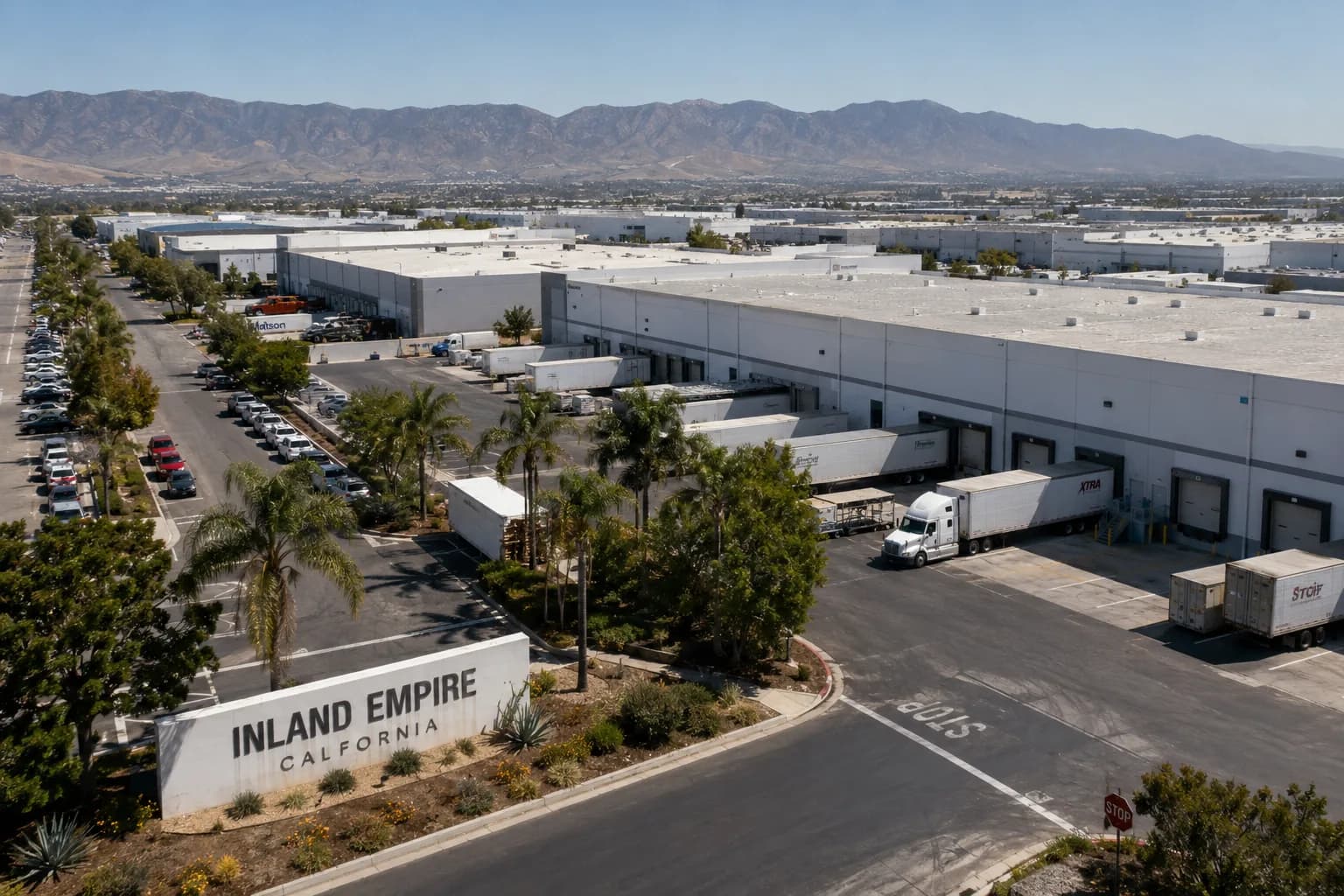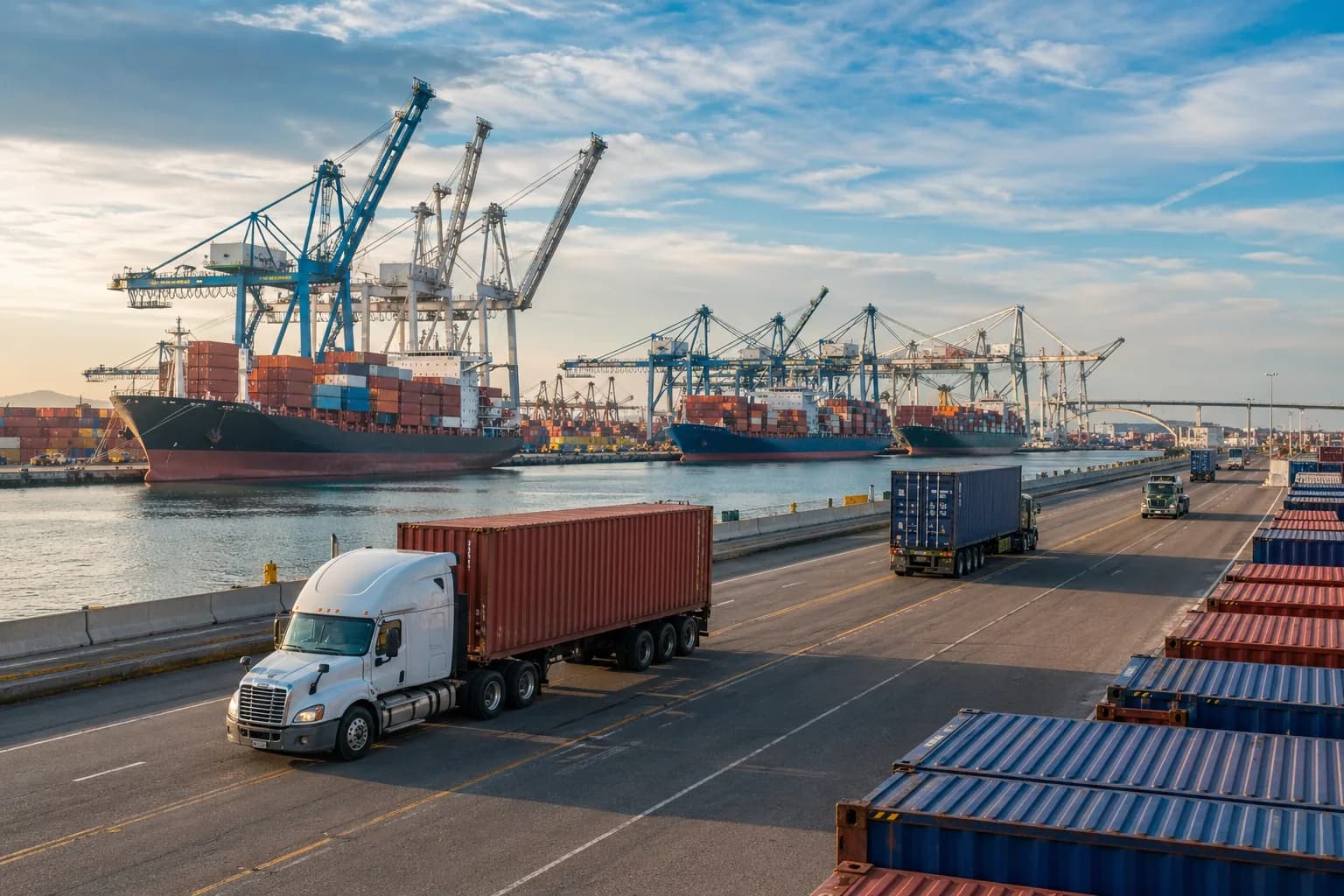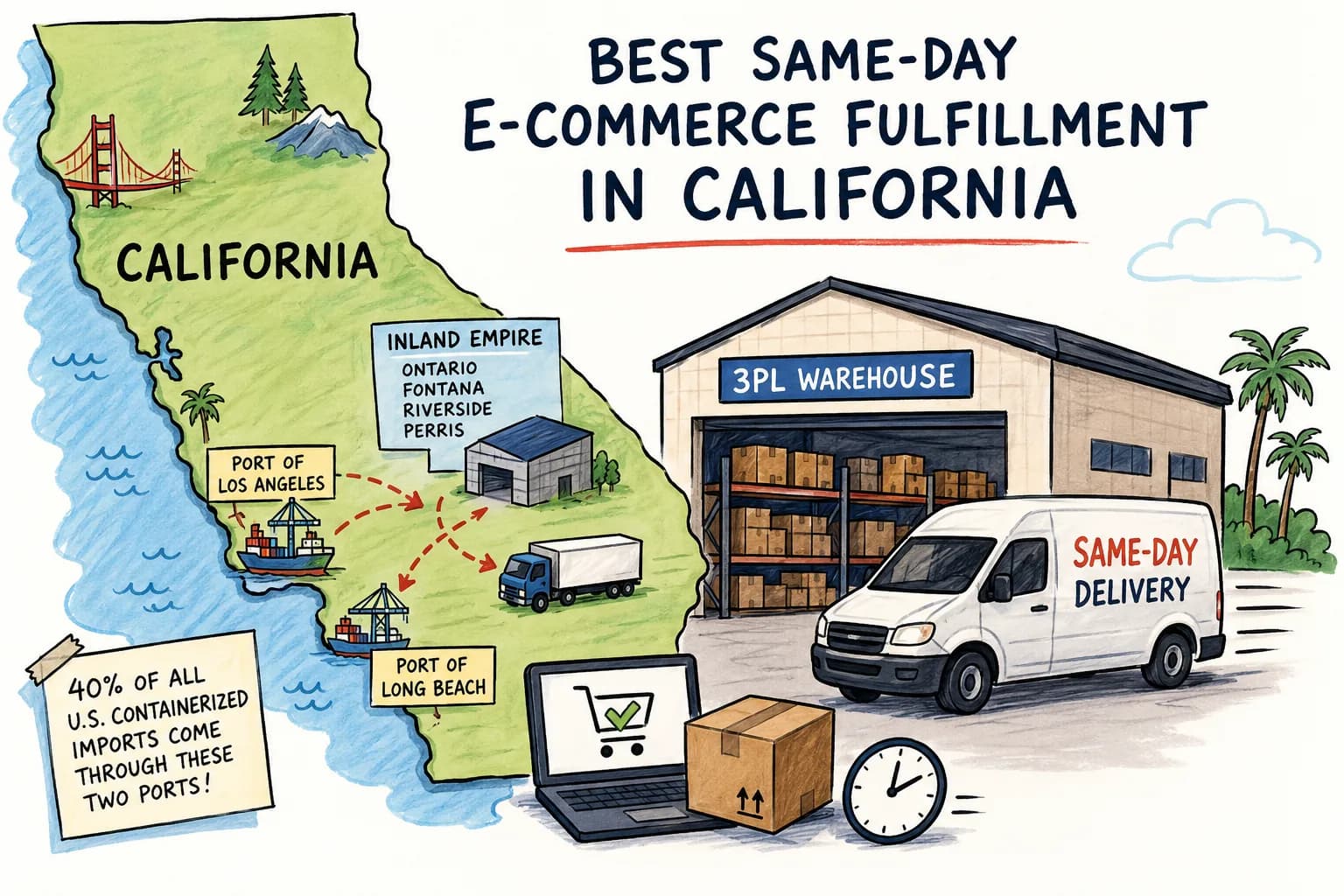
If you're shipping to California customers, same-day and next-day delivery comes down to one thing: how close your inventory sits to the Ports of Los Angeles and Long Beach and the Inland Empire warehouse corridor. Together, those two ports handle roughly 40% of all U.S. containerized imports, and the Inland Empire (Ontario, Fontana, Riverside, Perris) has become the main storage and distribution belt for goods moving out of them, according to WareMatch's California market data. A 3PL sitting inside that radius can turn a truck around the same day; one sitting in Nevada or Arizona can't.
Below are eight California 3PLs worth evaluating for same-day and next-day e-commerce fulfillment in no particular order. Each 3PL offers a different specialty: food and beverage, big & bulky freight, boutique DTC brands, hazmat, or full port-to-shelf freight handling.
1. Regal Logistics — Anaheim, CA
Regal Logistics runs an Orange County distribution center in Anaheim built around what the company calls a "port to sale" model: drayage, transloading, and intermodal handling paired with warehousing and last-mile fulfillment under one roof. Regal is recognized as a Top 100 3PL provider with over 50 years in the business and its own private trucking fleet, so brands can source freight brokerage, FTL/LTL, and dedicated fleet delivery from the same partner handling their inventory. That combination matters for same-day fulfillment because Regal isn't handing off to a third carrier for the first mile from the ports; it's running that leg itself.
Best for: brands that want port drayage, freight, and warehousing bundled with one provider.

2. ODW Logistics — Redlands, CA
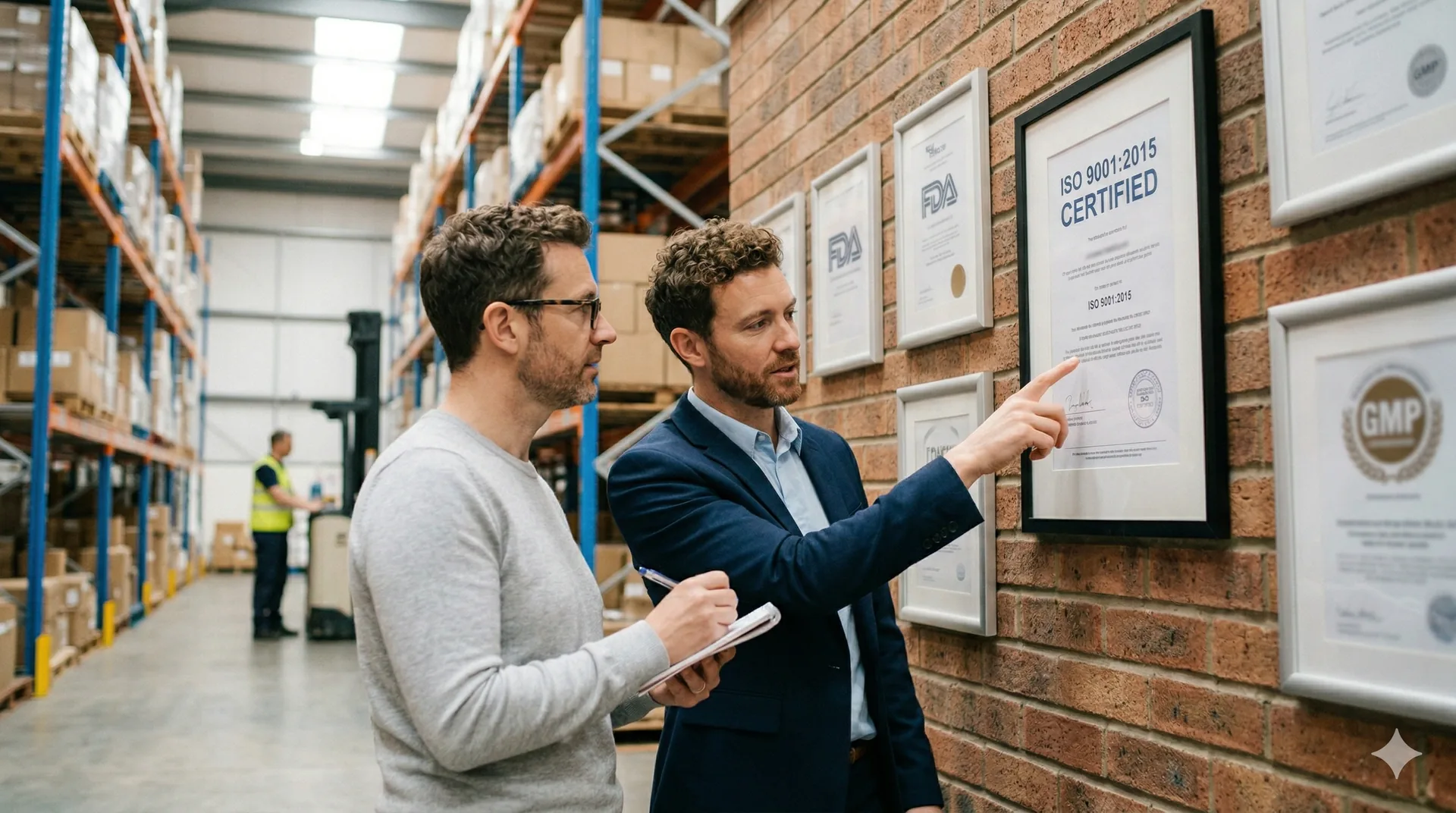
ODW operates a roughly 256,000-square-foot facility in Redlands, inside the Inland Empire corridor, with FDA registration for food-grade storage. ODW's own site points to easy highway access across Southern California and the rest of the state, which is the piece that matters for same-day delivery. A facility can be FDA-registered and still be too far from the freeway grid to hit tight delivery windows. Redlands isn't.
Best for: food, beverage, and CPG brands that need FDA-registered storage close to the ports.

3. Kenco Group — Perris, CA
Kenco's Perris facility runs 414,060 square feet and carries both AIB and SQF certification alongside food-grade status. SQF (Safe Quality Food) is a step above general food-grade handling. It's a GFSI-benchmarked program that requires documented food safety management, not just clean storage, so this is the listing to look at if your buyer or retail partner requires SQF specifically rather than just FDA registration.
Best for: food and beverage brands whose retail partners require SQF certification.

4. Lecangs Logistics — Perris, CA
Lecangs runs a 1.2 million-square-foot facility in Perris built specifically around "big and bulky" e-commerce, including furniture, exercise equipment, automotive parts, and other oversized SKUs that most fulfillment centers won't touch. The facility uses AGV/AMR automation for order processing and connects to Amazon FBA, Wayfair, and eBay, and Lecangs is listed as a Top 50 FedEx customer, which typically translates to better outbound freight rates passed on to shippers. If your product doesn't fit in a standard parcel box, this is a stronger match than a general pick-and-pack warehouse.
Best for: big & bulky and oversized SKUs that standard parcel-focused 3PLs can't fulfill efficiently.

5. Weber Logistics — Rancho Cucamonga, CA
Weber's Rancho Cucamonga site is 275,760 square feet and holds AIB, GFSI, and C-TPAT certifications on top of food-grade status. C-TPAT (Customs-Trade Partnership Against Terrorism) certification specifically speeds up customs clearance for imported goods, which is useful if your product line still comes through the ports regularly rather than being fully domestic. Weber has also published its own breakdown of port drayage and transloading services, for brands that want to understand that side of the operation before signing.
Best for: import-heavy food and beverage brands that need C-TPAT-cleared customs handling.

6. Blue Squirrel Storage Company — Oceanside, CA
Blue Squirrel is the smallest facility on this list at 35,000 square feet, and that's by design. It's built for boutique and early-stage DTC brands that don't need a 250,000-square-foot warehouse and don't want to pay for one. The San Diego-area location handles Amazon FBA prep alongside direct-to-consumer order fulfillment, making it a fit for brands scaling out of a garage or a 3PL that previously felt oversized for their order volume.
Best for: small and boutique DTC brands in Southern California that don't need enterprise-scale warehouse space.

7. Iron Mountain — Victorville, CA
Iron Mountain is best known for records and information management, but the company also runs AIB- and FDA-registered warehousing, including a Victorville facility. What Iron Mountain brings that smaller regional 3PLs can't is a nationwide network, if a brand needs a second or third fulfillment node outside California later (East Coast, Midwest), Iron Mountain can support that expansion without a new vendor relationship.
Best for: brands that want a California fulfillment node from a provider with an established national network.

8. Proactive Supply Chain Group — Commerce, CA
Proactive's Commerce facility is 90,000 square feet and C-TPAT certified, with a service list that includes cross-border shipping, cross-docking, expedited shipping, drayage, and transloading, plus FTL/LTL trucking. Proactive also handles hazmat, which rules out most of the other providers on this list, if part of your catalog includes aerosols, batteries, or other regulated goods, this narrows the field fast. Commerce sits directly between the ports and downtown LA, which keeps last-mile delivery windows short for greater LA orders.
Best for: brands with hazmat SKUs that also need port drayage and FTL/LTL freight.

How to choose between them
Same-day capability is a byproduct of location plus order-cutoff discipline. When comparing these eight, weigh:
Distance from your order volume's center of gravity: A warehouse 20 minutes from the ports still might be an hour from your actual customer base in San Diego or the Bay Area.
Certifications that match your product: Not just certifications in general. SQF and FDA registration matter for food; C-TPAT matters if you're still importing; hazmat authorization matters only if you actually ship hazmat.
Whether freight is bundled or brokered out, providers like Regal and Proactive that run their own drayage and trucking tend to have more control over cutoff times than 3PLs that hand freight to a third-party carrier.
Facility size versus your actual pallet count: A 1.2-million-square-foot facility built for big & bulky freight isn't necessarily a better fit than a 35,000-square-foot boutique operation if your SKU count and order volume are small.
Submitting one Request for Quote through WareMatch surfaces bids from these and other verified California 3PLs directly, so you're comparing real pricing instead of working through each one individually.
Frequently Asked Questions
What makes a 3PL capable of same-day e-commerce fulfillment in California? Proximity to the customer base and to the Ports of Los Angeles and Long Beach, plus an order cutoff time early enough in the day to pick, pack, and hand off to a carrier before the last outbound truck leaves. Warehouses in the Inland Empire (Perris, Rancho Cucamonga, Redlands) or directly between the ports and Los Angeles (Commerce, Anaheim) are positioned for this; warehouses further inland generally aren't.
Which certifications should a food or beverage brand look for in a California 3PL? FDA registration is the baseline. SQF (Safe Quality Food) and AIB certification go further, requiring documented food safety management systems rather than just clean storage practices. Kenco Group and Weber Logistics both carry SQF or GFSI-benchmarked certifications in addition to AIB and food-grade status.
Can a big & bulky product (furniture, exercise equipment, appliances) use a standard e-commerce 3PL? Not efficiently. Standard pick-and-pack warehouses are built around small parcel dimensions and weight limits. Facilities purpose-built for oversized freight, like Lecangs Logistics in Perris, use different racking, handling equipment, and carrier relationships suited to freight that doesn't fit in a standard box.
Do I need a large warehouse if I'm a small or early-stage brand? No. Smaller, boutique-focused 3PLs, like Blue Squirrel Storage Company in Oceanside, are built for brands with lower order volume and don't require the minimum commitments that come with enterprise-scale facilities.
What if my product includes hazmat SKUs? That narrows the provider list significantly. Of the eight above, Proactive Supply Chain Group is the one explicitly equipped to handle hazmat alongside standard drayage, transloading, and FTL/LTL freight.