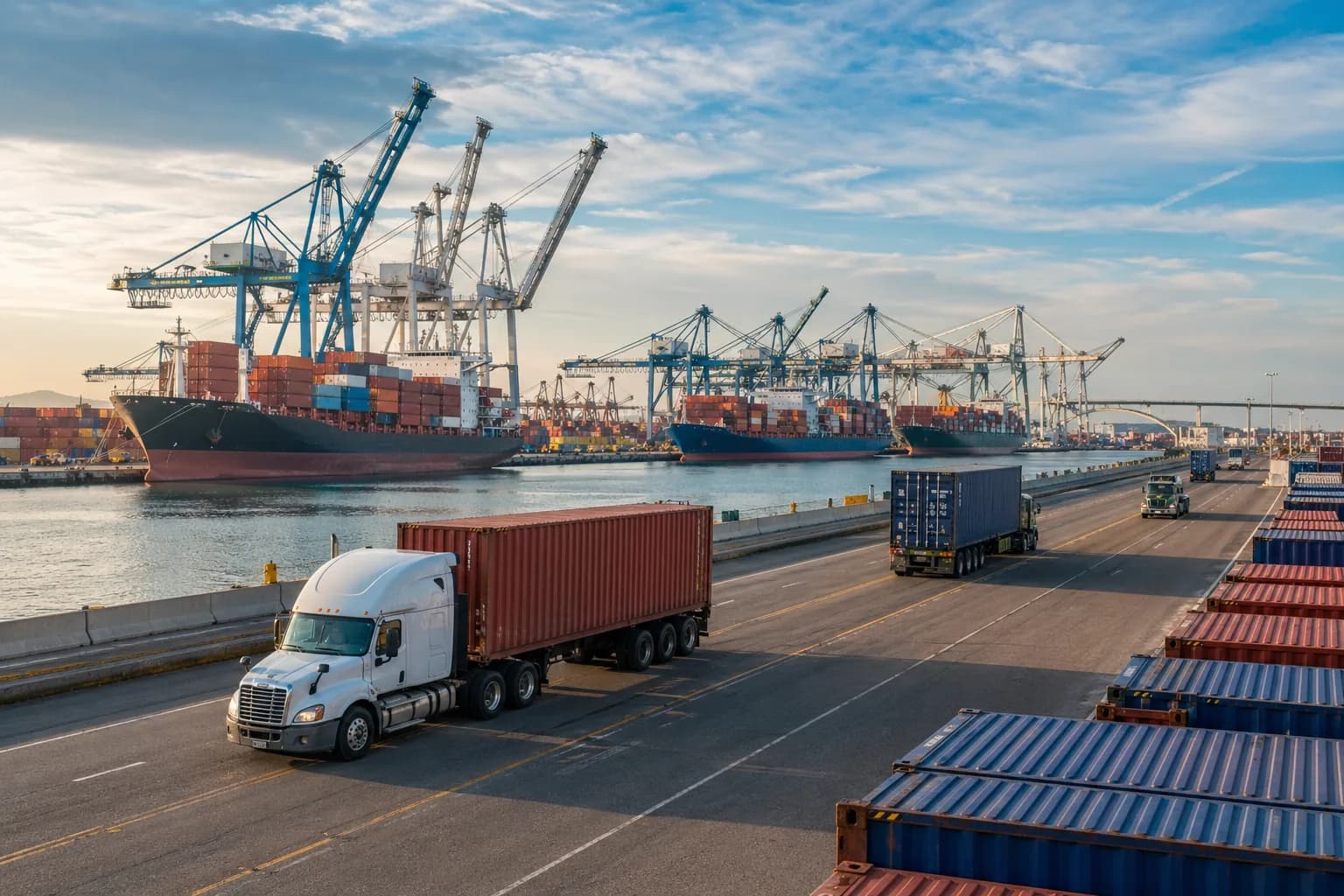
If your goods land in Los Angeles but your customers are in the Southeast, you're paying for that mismatch every single month; in drayage, inland rail, and slower delivery windows. Port selection and warehouse placement are the same decision, yet most importers treat them as two separate ones.
What Most Importers Get Wrong
The typical sourcing sequence goes: negotiate ocean freight, pick the cheapest or fastest port, then figure out warehousing later. The forwarder handles the port. Someone else finds a 3PL. These two decisions rarely happen in the same conversation.
That sequencing is expensive.
Where your freight lands determines your drayage radius, your inland transit costs, and how quickly you can replenish regional stock. A container sitting on a ship headed to Los Angeles, when your customers are concentrated in Georgia and Tennessee, is already costing you money before it clears customs. And once you've signed a warehouse lease or committed to a 3PL relationship near the wrong port, you're locked in.
With tariff volatility forcing importers to rethink their sourcing lanes in real time, and with warehousing utilization at record lows creating real flexibility in the market, right now is a practical moment to realign. The question is knowing what's available near the right corridors.
The Six Ports That Matter Most, and What Each One Implies for Your Fulfillment Footprint
Los Angeles / Long Beach
The Port of Los Angeles handled approximately 10.3 million TEUs in 2025, making it the highest-volume container port in the country by a significant margin. Trans-Pacific transit times from major Asian manufacturing hubs are typically two to three days faster than East Coast alternatives, depending on origin.
That speed advantage is real. So is the tradeoff.
If your customer base skews Northeast or Southeast, routing through LA means your inventory either sits near the port while you pay Southern California warehousing rates, or it goes back on a train cross-country, adding four to six days and several hundred dollars per container in rail fees. For e-commerce brands with tight delivery SLAs, that inland leg erodes the transit time advantage.
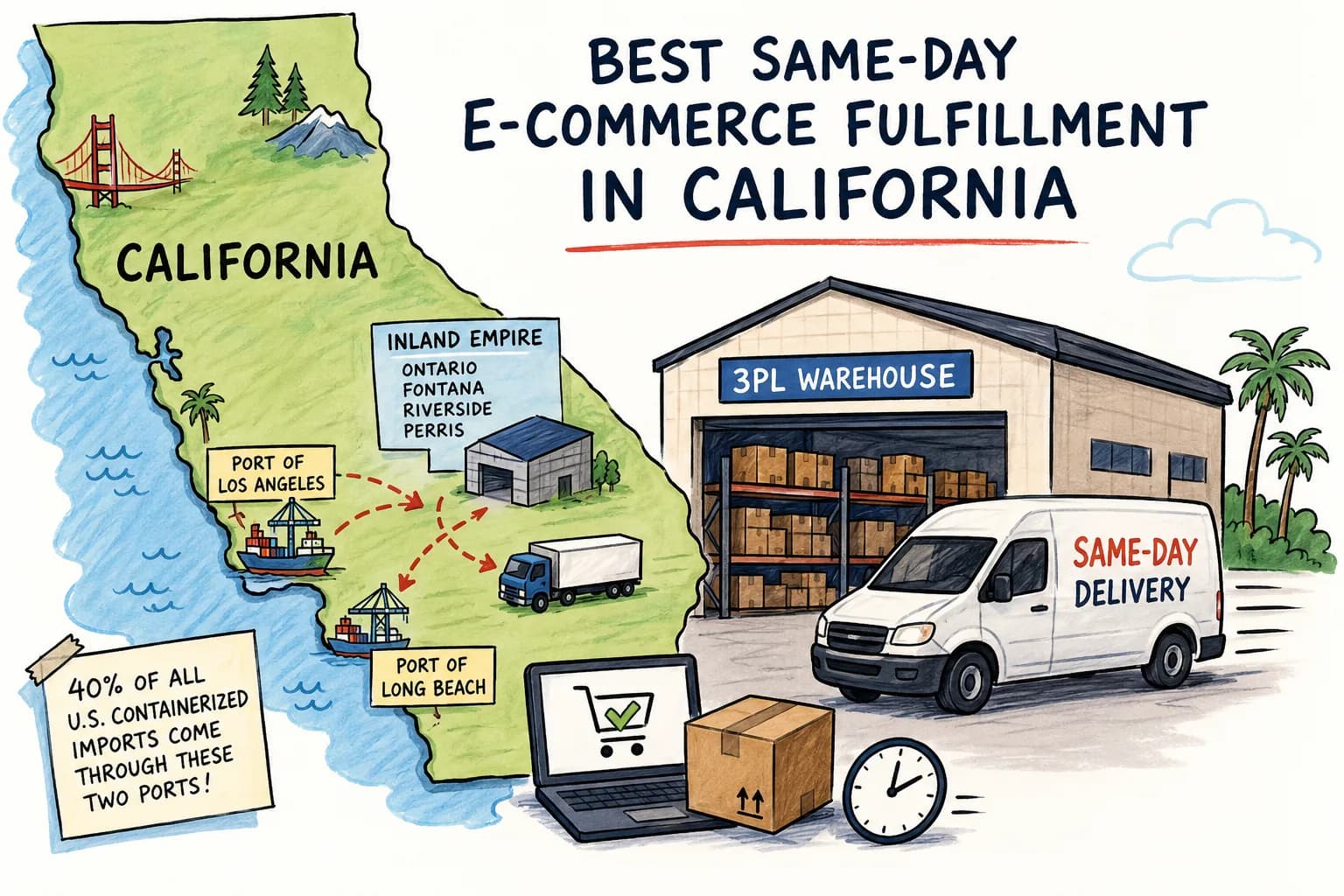
When LA makes sense: your customer concentration is West Coast-heavy, you're in a category requiring fast turns from Asia, or you're using a 3PL ecommerce partner in California already set up for high-velocity fulfillment.
For brands actively looking at 3PL logistics California options or warehouses for rent Los Angeles, the supply is there, but the costs are higher than most other corridors, and the math only works if your distribution geography supports it.
New York / New Jersey
The Port of New York and New Jersey is the dominant East Coast gateway, with direct access to the largest consumer market in the country. For brands with 3PL NJ relationships or warehouse storage space for rent in the tri-state area, freight moving through this port avoids the cross-country rail leg entirely.
The port also has strong rail connectivity into New England and the mid-Atlantic corridor. If your fulfillment is concentrated in the Northeast (New York, Massachusetts, Pennsylvania, Connecticut), this is the routing that makes distribution straightforward.
The limitation: New York is not a natural hub for Southeast or Midwest distribution. If you're splitting inventory to cover the whole country, you'll still need a secondary fulfillment point further south or central.
Port of Savannah
Savannah is a growth story worth watching. The Georgia Ports Authority has a major expansion underway, and a new inland rail connector near Atlanta is expected to come online in mid-2026. That rail link will put Savannah-landed freight within same-day reach of the Southeast's largest distribution hub.
Savannah's position as the most westerly Atlantic port gives it a geographic edge for brands distributing into the Southeast and Midwest. It's now the third-busiest container port in the U.S. by volume, and it's adding capacity faster than any other East Coast gateway.
For e-commerce brands with a national customer base, Savannah often produces better distribution math than New York. You can reach Atlanta, Charlotte, Nashville, and Birmingham without a cross-country rail move. And with available warehouse space in the Georgia/Southeast corridor currently at attractive rates relative to coastal markets, the timing is reasonable.
Port of Virginia (Norfolk)
The Port of Virginia is completing a channel deepening to 55 feet, which will make it the deepest harbor on the East Coast. That depth enables ultra-large vessel calls that currently call only at West Coast ports. As Logistics Management reported in January 2026, this positions Virginia as an increasingly competitive option for brands on Asia-to-East-Coast lanes.
Operationally, the Port of Virginia has strong rail connections to the Midwest and mid-Atlantic. For brands looking at industrial warehouse space in Virginia or the Carolinas, this is worth factoring into the equation, particularly as shipping lines add or expand East Coast calls in response to tariff-driven lane shifts.
Port of Houston
Houston handles approximately 4 million TEUs annually and is the Gulf Coast's primary industrial anchor. For brands with heavy, bulky, or industrial SKUs, such as furniture, equipment, raw materials, building products, Houston's proximity to the South-Central U.S. is a genuine distribution advantage.
The consumer market in Texas is large enough that some e-commerce brands can justify a Gulf Coast fulfillment node on volume alone. And for any brand sourcing from Latin America rather than Asia, Houston and other Gulf ports often produce better transit economics than routing through the coasts.
Industrial solutions providers in the Houston corridor tend to have meaningful heavy-goods experience that generalist 3PLs in coastal markets may not.
The Problem Nobody Talks about: Warehouse Visibility Near Port Corridors
Once you've worked out which port fits your distribution geography, the next question is practical: what 3PL or warehouse space is actually available near that port, and how do you find it quickly?
This is where most importers run into a wall.
The 3PL market is fragmented. There's no central directory of available warehouse space organized by port proximity. Brands either rely on brokers (who show them what's in their network, not what's best for the routing), word of mouth, or a Google search for "warehouse storage near me" that produces a mix of self-storage and industrial space listings with no useful filters.
The result: brands end up locked into a 3PL relationship near the wrong port because that's who they found first. They absorb the cross-country rail or long-haul drayage costs because switching costs feel high. And they often don't know whether cheap warehouse space for rent near Savannah or Virginia even exists, because they never had a clear way to look.
What WareMatch does differently
WareMatch is a 3PL marketplace and flexible industrial leasing platform that gives importers visibility into warehouse options across U.S. port corridors. You can browse through the marketplace and discover the 3PL providers best equipped for your project, and reach out to them directly.
For brands trying to find the right e-commerce warehouse near a specific port or comparing top third-party logistics companies across multiple corridors, WareMatch removes the manual legwork. You get real options with pricing, capacity, certifications, and reviews, instead of a broker's curated shortlist.
For 3PL operators with available warehouse space near high-traffic port corridors, the platform is a direct way to fill that space. Listings go up in minutes. Pricing adjusts to market demand. And inbound leads come from brands actively looking in your geography.
The question to ask before your next shipment
Before you book your next ocean freight, ask: where do my customers actually live, and which port puts my inventory closest to them?
If the answer points to a different entry point than you're currently using, the cost to realign may be lower than you think. Warehousing utilization is at record lows right now, which means month to month warehouse rental options exist in corridors that used to have long waitlists. And warehouse lease terms have gotten more flexible as operators compete for tenants.
The brands that come out of the current tariff environment with better unit economics will be the ones that treated port selection and warehouse placement as one decision.
Ready to find the right warehouse near your port?
Whether you're looking for warehouse storage space for rent near a specific port corridor, want to compare 3PL ecommerce providers across regions, or have industrial warehouse space you want to list, WareMatch connects you to the right partners faster.