The main signs you should switch your 3PL in Canada are the following:
unexplained rate increases
a warehouse location that no longer matches your customer geography
recurring fulfillment errors with no accountability
broken communication
a provider that can't scale with your business
unmet Canada-specific needs like bonded warehousing or multi-node distribution
Most brands recognize one or more of these problems long before they act on them. The disruption feels significant: inventory to transfer, integrations to rebuild, parallel operations to manage during the transition. So when a 3PL starts under-performing, the common response is to absorb it, negotiate, and hope it gets better.
That logic treats the switching cost as the larger risk. In most cases, it isn't. The cost of staying with the wrong provider compounds every month: inflated rates, shipping errors that erode customer trust, locations that bleed margin on every outbound shipment. The switching cost is a one-time event. The cost of staying is recurring.
This post covers each of these signals in detail, with particular attention to the Canadian market, where a few additional factors, such as bonded warehousing, cross-border complexity, and multi-node strategy, tend to catch brands off guard.
1. Your rates keep climbing with no explanation attached
Annual rate increases in logistics are expected. Carriers have consistently pushed through increases in the 4.6% to 6.9% range per year, and your 3PL will pass some of that through. That's normal.
What isn't normal is rate hikes from your 3PL that can't be tied to a specific cost driver. If your storage rate increased at renewal with no explanation, or your accessorial charges have quietly expanded over the past year, or fuel surcharges are being applied inconsistently, those are pricing problems, not market adjustments.
The trap most brands fall into is accepting increases because they assume switching costs more. That assumption is rarely tested with actual data. When you run a proper competitive bid, you often find the market has moved in your favor, especially if your volume has grown and your logistics profile has become more attractive to providers.
WareMatch is built specifically to surface that information. By submitting an RFQ, you get real, competing quotes from vetted 3PL providers matched to your profile, which tells you quickly whether you're paying market rate or carrying a loyalty tax on your logistics spend.
2. You're paying for the wrong location
Warehouse location has a direct and measurable impact on your outbound shipping costs. A provider that made sense geographically when you launched may not make sense anymore if your customer base has shifted, if you've expanded into new sales channels, or if your order volume has grown enough that zone-averaging is costing you real money.
Shipping zones are one of the primary drivers of last-mile cost. A brand fulfilling mostly from a single node in one region is absorbing inflated zone charges on every shipment that goes to the other end of the country. Moving to a better-positioned facility, or adding a second node, can reduce those costs materially.
For Canadian brands specifically, the single-node assumption tends to break down earlier than expected. Serving customers in both Canada and the US from one Canadian location is often a false economy, particularly once cross-border volumes reach a point where US customers are consistently receiving slow, expensive shipments.
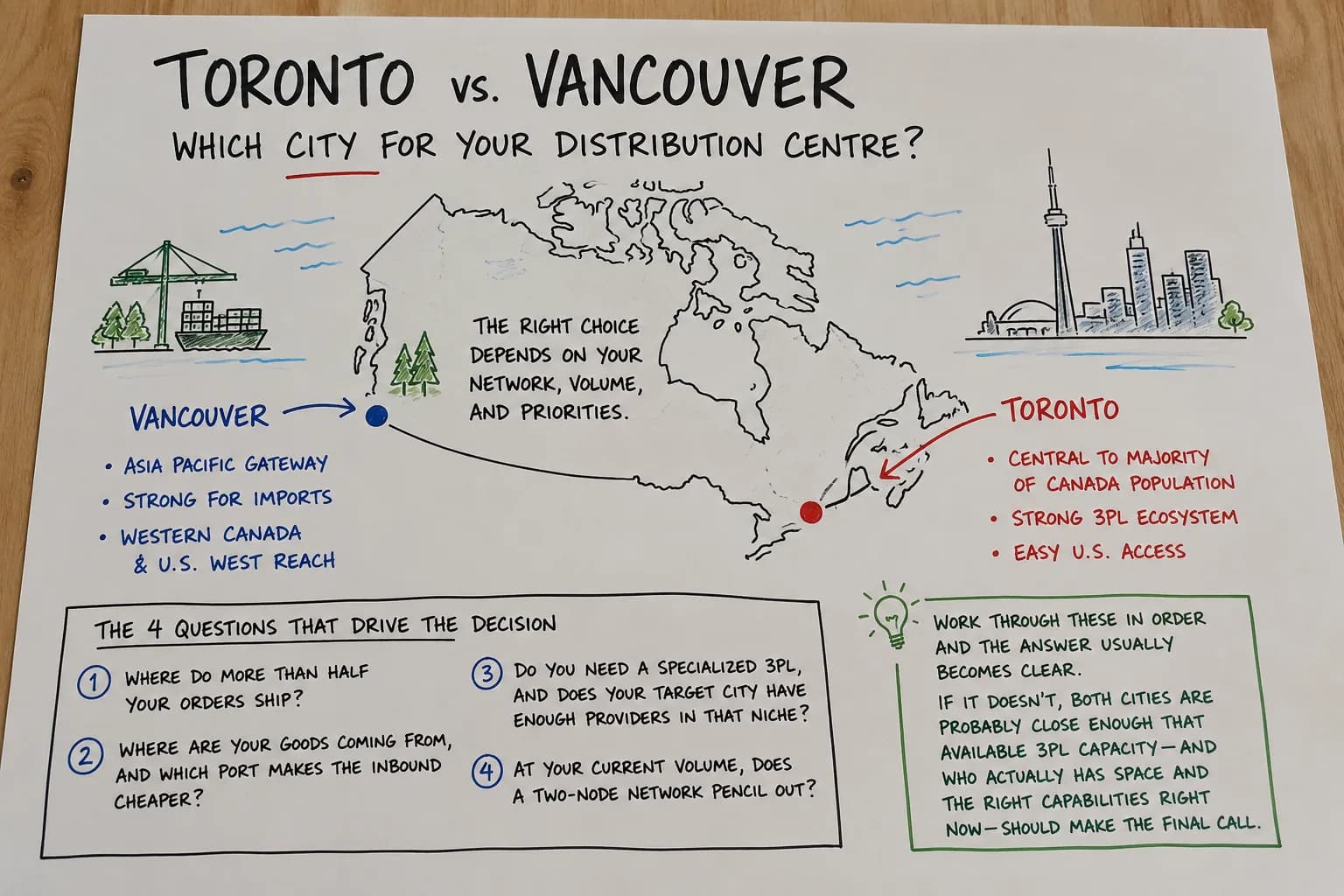
This is where competitive bidding does more than confirm your current rates. It can identify options in geographies you haven't considered, including US-side facilities near border crossings, Toronto or Vancouver locations for split distribution, or providers already set up to handle cross-border volume at scale.
3. Errors are recurring, and nobody owns them
Mis-picks happen. Receiving discrepancies happen. Late outbounds happen. Every 3PL operation has errors. What separates a good provider from a failing one is not error frequency but error ownership.
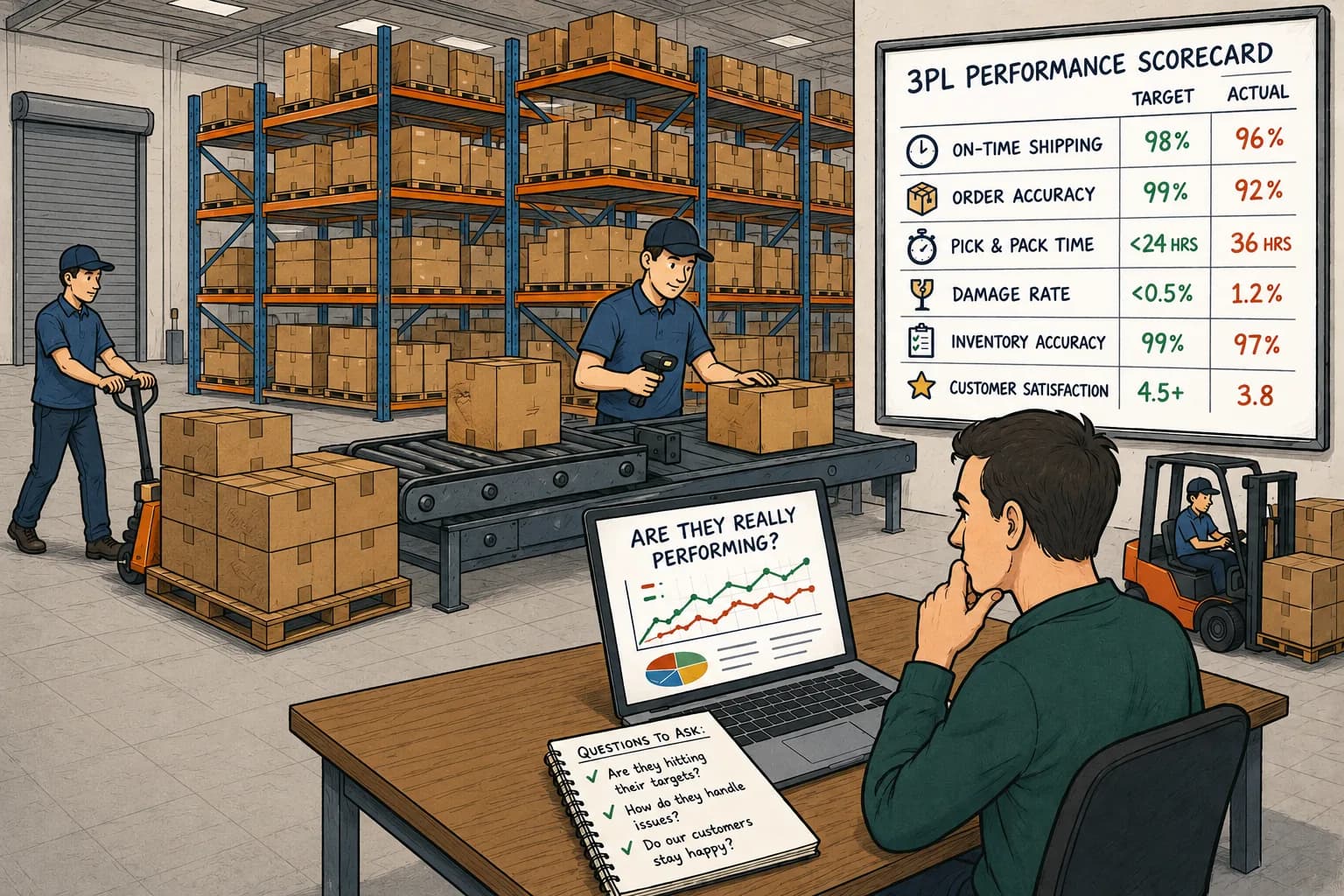
The real warning sign isn't a mistake; it's the pattern around it. Order accuracy rates below 99.5% in a modern fulfillment operation are a red flag. If you're regularly finding discrepancies in receiving, if damaged inventory claims drag on without resolution, if you find out about problems from your customers before your 3PL tells you, these are symptoms of a broken accountability structure.
Poor technology is often the root cause. A 3PL without a real WMS, without portal access for you to check inventory levels in real time, without outbound confirmation data you can actually see, is an operation running on manual processes and goodwill. It works until volume or complexity exceeds its tolerance, and then it doesn't.
As David Gulas of EZDC 3PL put it: "I talk to people that are not happy with a 3PL every day... no one ever goes in thinking that they're going to leave after six months or a year or their business is going to be in crisis and they need to move warehouses right away. But yet that happens all the time."
Track your order accuracy rate, inbound receiving discrepancies, and claim resolution time. If those numbers aren't going in the right direction, they won't fix themselves.
4. Communication has broken down
A 3PL relationship requires ongoing communication calibrated to your actual needs. Some brands need daily contact. Others check in quarterly. The standard your provider should meet is responsiveness to your situation.
The breakdown usually happens gradually. Account reps change and don't get replaced well. Escalations go into a queue. You start finding out about delays and inventory problems from your own customers. The relationship shifts from proactive partnership to reactive damage control.
Jeff Uherek of GrowthSpoke frames it this way: "We are here to support our brands, whether that means we're talking to them 15 times a day or once a quarter." That's what a functional 3PL relationship looks like; availability shaped around your volume and velocity, not the provider's internal bandwidth.
When communication breaks down at a structural level, service quality follows. The two are rarely separate problems.
5. You've outgrown them
Warehousing is more specialized than most brands realize. The 3PL that managed your early-stage volume efficiently may not have the infrastructure, certifications, or technology to manage what your business looks like now.
Volume growth creates capacity pressure. New sales channels, such as wholesale, retail replenishment, and marketplace fulfillment, each carry distinct operational requirements. New product types create compliance needs: hazmat handling, temperature-controlled storage, food-grade certification, oversized or irregularly shaped items. A generalist provider that worked well at $2M in revenue often can't efficiently serve a $10M operation.
Bill Robinson of the Wellington Group of Companies puts it plainly: "Warehousing is more specialized than people think it is." A provider that was a strong fit at one stage of your business may be the wrong fit at the next.
If you're growing into new geographies, new product categories, or new compliance requirements, it's worth asking whether your current 3PL can genuinely support that, or whether they're simply saying yes to retain your contract.
6. The Canada-specific layer
Canadian shippers face a few logistics considerations that don't apply in the same way south of the border, and they're worth addressing directly.
Bonded warehousing. If you're importing goods and deferring duty payments until those goods enter the commercial stream, your 3PL needs bonded warehouse status. Not all do. Many brands don't verify this until they're mid-shipment and discover their provider can't hold the goods properly. Before signing with any Canadian 3PL, confirm their bonded status if duty deferral is part of your import strategy.
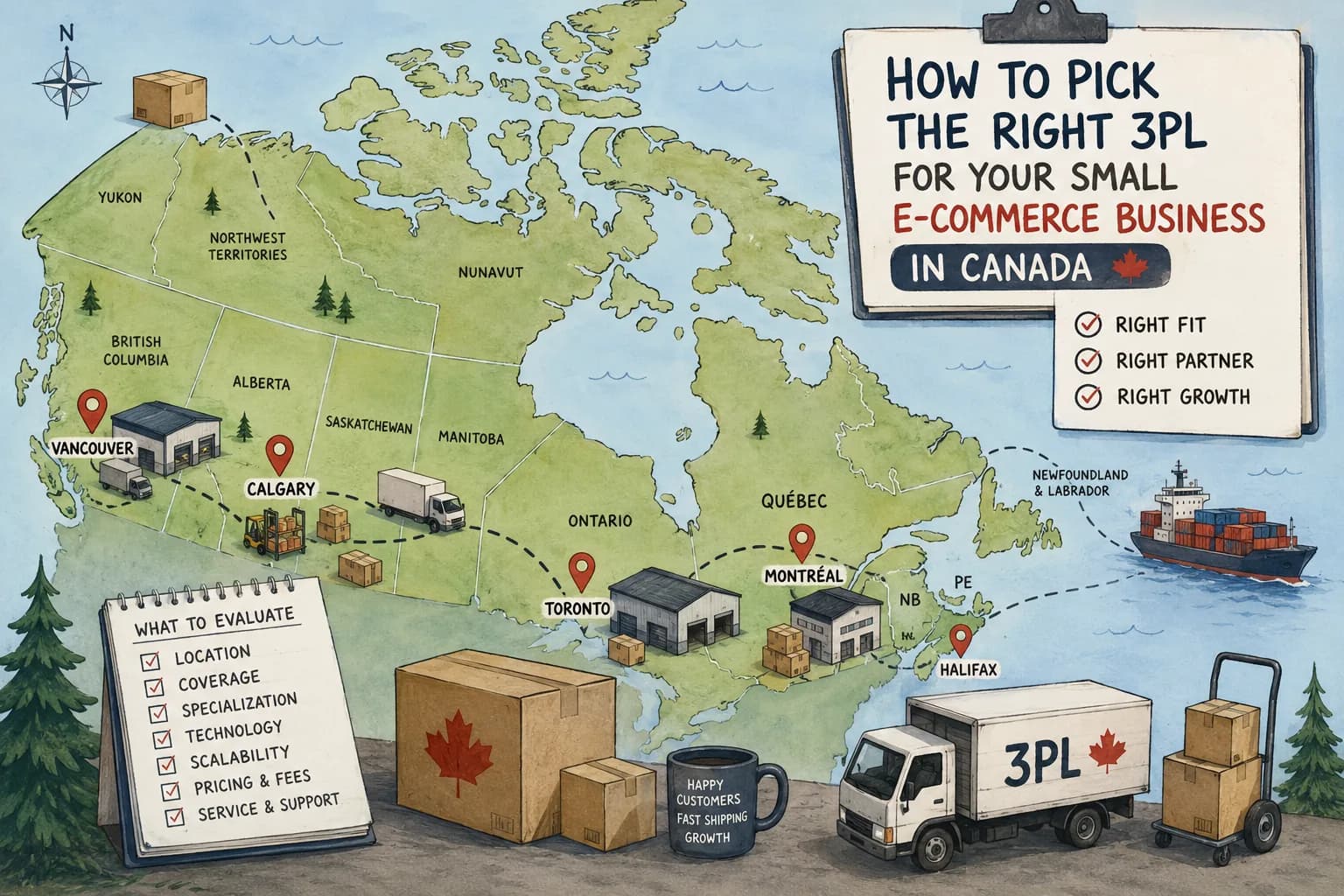
Multi-node strategy. Brands growing into both Canadian and US markets from a single Canadian warehouse are often carrying unnecessary shipping costs on every US order. A second node (e.g. a Toronto facility for Eastern Canada, a Vancouver facility for the Pacific corridor, or a US-side border facility) can change the unit economics of fulfillment significantly. This isn't a solution for every brand at every stage, but if your US order volume is material and your shipping times are competitive, it's worth modeling.
Customs, drayage, and the Canada-China trade dynamic. Canadian importers bringing in goods manufactured in China need a 3PL that understands how to manage the full import chain, including customs clearance, port drayage, container volume fluctuation, and SKU complexity as volumes change. The tariff environment has added urgency to this. A 3PL without real customs expertise in this lane is a liability, not just a gap in service.
7. The switching cost objection, addressed directly
The most common reason brands stay with under-performing 3PLs is the switching cost objection: "It's too expensive and time-consuming to switch."
There's truth in it. Inventory transfer, new integration setup, parallel operations during transition, and onboarding time are real costs. But they're also finite. You do it once, and then you're done.
The cost of staying with the wrong provider is recurring. Inflated rates compounding annually. Shipping errors eroding customer lifetime value. Poor location inflating zone costs on every outbound. Capability gaps limiting your ability to grow. These don't resolve on their own.
The switching cost is highest when you're in crisis mode, when you have inventory moving and no destination. It drops significantly when you find qualified options before you need them, before a contract expires, before a service failure forces your hand.
What to do when you recognize these signs
If two or more of the signals in this post describe your current situation, the first step is information, not commitment. An RFQ through WareMatch gives you real quotes from vetted 3PL providers matched to your logistics profile, with competitive pricing and location options you can actually compare against your current setup.
You'll know whether you're paying market rate. You'll see what your options look like in locations that might serve your customer geography better. You'll have a real picture of what a transition would involve.
Most brands that run the numbers find the switching cost is smaller than expected. And the cost of staying is often higher than they've been willing to admit.
Submit an RFQ on WareMatch and find out what the market actually charges for your logistics profile.