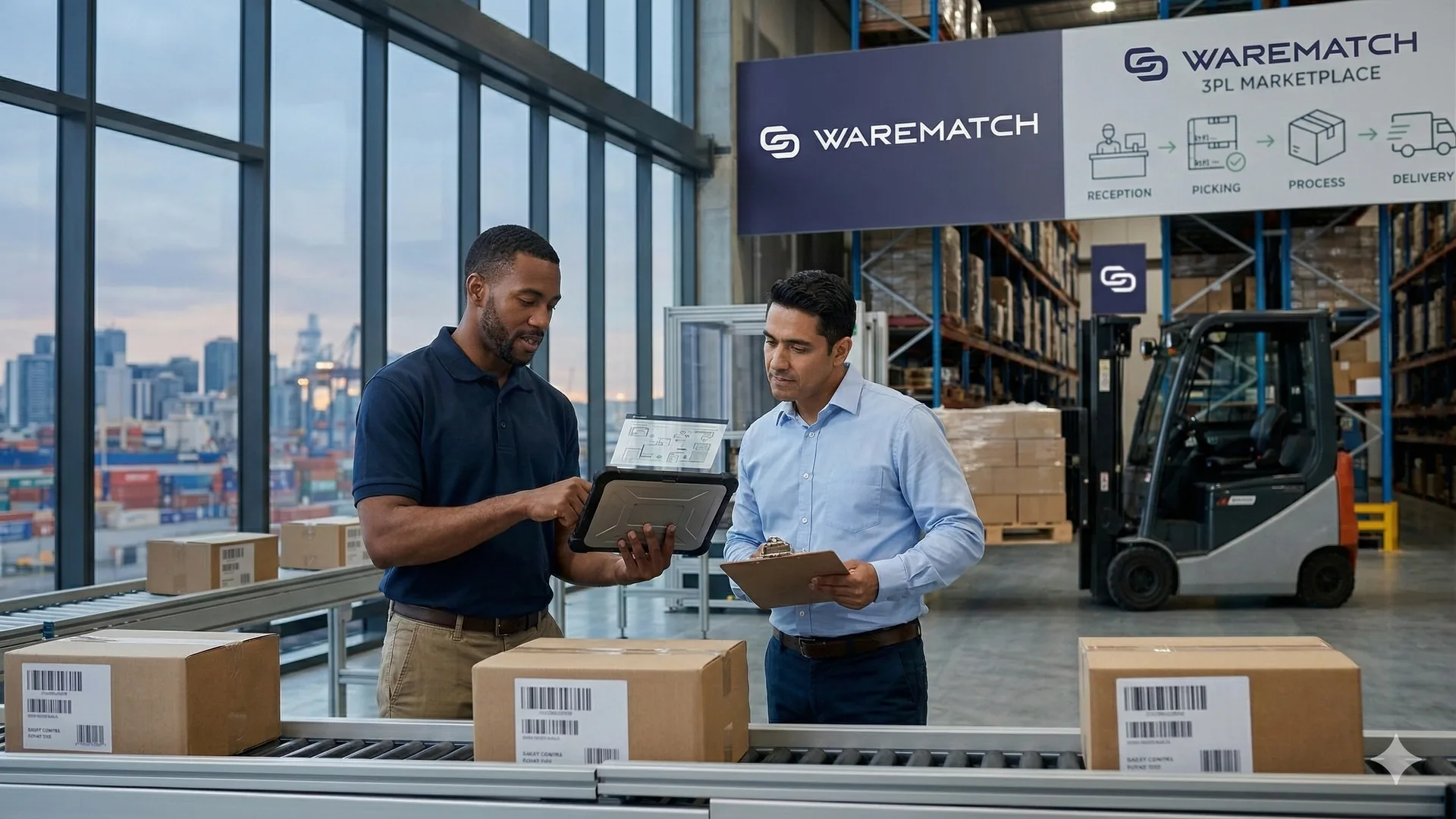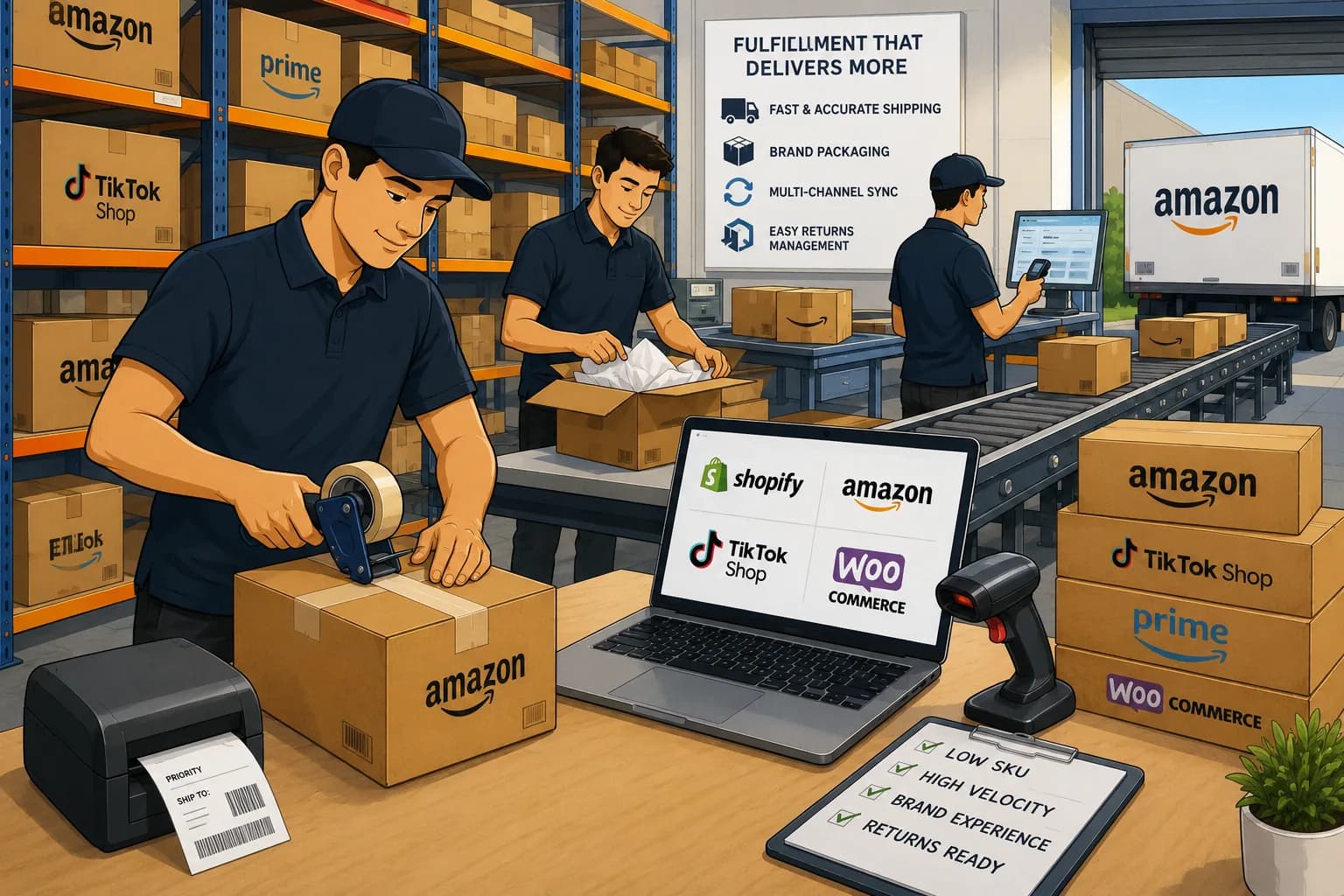
A D2C-capable fulfillment center is different from a general warehousing 3PL in four specific ways: it's built for low-SKU, high-velocity inventory rather than pallet storage, it treats unboxing and packaging as part of the service rather than an afterthought, it can sync orders across Shopify, Amazon, TikTok Shop, and WooCommerce at once rather than one platform at a time, and it has a real plan for absorbing your returns without losing inventory visibility. A general 3PL that lists e-commerce fulfillment as one of ten services on its website usually isn't built for all four. Finding out which providers actually are, without relying on one broker's shortlist, is what this piece covers.
D2C brands need a different kind of warehouse
A lot of fulfillment sourcing content treats 3PL as one category. It isn't. A 3PL built around bulk pallet storage for a manufacturer moving slow-turning industrial goods is optimized for square footage and dock efficiency. A D2C brand shipping sub-10-pound parcels at high daily velocity needs the opposite: dense, fast-pick shelving, frequent small-batch outbound, and a team built around individual parcel accuracy rather than pallet counts.
Anton Kashirin, founder of Ecom Automation Prep, built his South Florida operation specifically around this profile, describing on the Behind the Docks podcast how the company carved out its niche serving fast-moving, lightweight D2C brands rather than general storage clients. That specialization shows up in how the company markets itself: its site is explicit that the service is built for fast shipping, accurate orders, and flexible e-commerce growth, not long-term bulk storage. That's a meaningfully different operational model than a warehouse that happens to also offer pick-and-pack.
The takeaway for a shortlist: ask a candidate provider directly what percentage of their current clients are D2C versus B2B/bulk storage, and what their average outbound order size looks like. A provider whose real client base is mostly pallet-in, pallet-out storage will structure their operation around that, even if their website lists e-commerce fulfillment as a service.
Unboxing and packaging as a real selection criterion
For a premium or brand-forward D2C company, the box is part of the product. A generic 3PL will pack your order correctly and ship it on time, and still hurt your brand if the unboxing experience doesn't match the rest of your marketing.
Dave Gulas, co-founder of EZDC 3PL, has pointed to custom packaging and unboxing experience as one of the differentiators brands should raise directly in a vetting conversation, not something to assume every provider handles the same way. It's a fair test: ask a candidate 3PL to walk through exactly how they handle custom inserts, branded tape, tissue paper, and any assembly work your packaging requires, and whether that adds a line-item fee or slows down their standard pick-and-pack cycle time. If they haven't set up a workflow for it, you'll find out during your first peak season, not during the sales call.
Multi-channel isn't a special case anymore
A brand that sells only on Shopify has one integration to worry about. A brand selling on Shopify, Amazon, TikTok Shop, and WooCommerce simultaneously, which describes most growing D2C companies at this point, needs a fulfillment provider whose warehouse management system can reconcile inventory and order data across all of them without creating oversells or shipping delays on any single channel.
TikTok Shop is the newest and most volatile piece of that puzzle. TikTok has its own recipient-address masking requirements that a 3PL's integration has to handle correctly, according to TikTok Shop's own Partner Center documentation, and the platform has moved its label-generation and tracking requirements onto its own API and Seller Center rather than allowing arbitrary third-party shipping tools to handle it end to end, a shift the logistics trade press has covered as a real technical disruption for multi-channel sellers relying on tools like ShipStation. A 3PL that hasn't built and tested that specific integration will either ask you to fulfill TikTok orders manually or push you toward TikTok's own in-house fulfillment program, which takes fulfillment control out of your hands.
This is the practical difference between "we integrate with e-commerce platforms" and "we run live, tested integrations with the specific platforms you sell on." Ask any candidate 3PL to name the exact channels their WMS currently reconciles inventory across in real time, not just which platforms their software claims to support, and ask what happens operationally when TikTok changes its API again, because it has done that more than once in the past year alone.
Some D2C brands stay D2C-only. Many don't. A brand that starts as pure e-commerce often ends up adding wholesale or retail distribution once it has traction, and that shift changes what "fulfillment fit" means again.
Barrett Distribution positions itself explicitly as this kind of step-up provider, one that supports brands moving from a D2C-only model into full omni-channel distribution with retail compliance, routing guide management, and EDI handled inside the same operation. Bryan Corbett, VP of Sales and Marketing at Barrett, put the underlying principle directly in comments to Inc. Business Media covering the company's growth: don't pick a 3PL based only on what your business needs today, pick one that can scale with you a year, three years, or five years down the road. A provider with no retail-compliance infrastructure will need to build that capability from scratch exactly when you need it most, during your first big retail rollout.
If retail or wholesale distribution is anywhere on your roadmap, ask now whether a candidate 3PL already runs live EDI connections and routing-guide compliance for other clients, not whether they're theoretically capable of building it later.
Two misconceptions that cost brands real money
"Any 3PL that lists e-commerce fulfillment can service D2C well." Listing a service and being built around it are different things. A general warehousing 3PL can usually bolt pick-and-pack onto its existing operation, but its staffing model, shelving layout, and SLA structure were built for a different order profile. That mismatch tends to show up first during peak volume spikes, when a general 3PL's elasticity assumptions don't match a D2C brand's actual demand curve.
"Price is the primary signal of fit." The cheapest quote often comes from a provider optimized for a completely different kind of client. A quote that looks 15% cheaper than the next option is worth asking about specifically: what's excluded, what SLA is actually guaranteed in writing, and what the provider's real specialization is. WareMatch's guide on what certifications brands should look for when selecting a 3PL covers how to verify claims like "compliant" or "certified" instead of taking them at face value.
Both misconceptions point to the same underlying pain point: opaque quoting and vague capability claims push brands into engaging providers who were never the right operational fit, and that mismatch is usually invisible until the first real volume spike or the first retail order lands.
Match on operational fit, not on reputation or a single shortlist
The providers referenced above, Ecom Automation Prep, EZDC 3PL, and Barrett Distribution, aren't a ranked "top 3" and shouldn't be treated as one. They're examples of how differently 3PLs specialize, even within the "D2C fulfillment" label. The right process is to score any candidate against your actual requirements, SKU velocity and average order size, unboxing and kitting needs, the specific sales channels you run today and the ones you're likely to add, and retail readiness if that's on your roadmap, and to do that scoring across more than one provider before committing.
That's also the structural argument against relying on a single broker or matchmaker relationship to make this call for you. A broker that earns a placement fee from whichever provider it recommends has a built-in incentive to steer the comparison toward price, the easiest variable to compare, rather than toward the operational fit questions above. WareMatch's explainer on what a 3PL marketplace actually is covers this distinction in more depth, and the step-by-step breakdown of how the RFQ process works walks through how to submit your requirements once and receive comparable, transparent bids instead of a single curated recommendation. If Amazon's own fulfillment network is also on your list of options, WareMatch's comparison of Amazon Supply Chain Services versus an independent 3PL is worth reading before you decide between the two.
Visit WareMatch to submit one RFQ with your actual SKU profile, channel mix, and growth plans, and get transparent bids back from vetted D2C-capable 3PLs so you're comparing real operational fit, not a shortlist someone else built for a different brand.