In today’s volatile macro-environment, supply chain resilience is a competitive necessity. As global markets face fluctuating prices and unpredictable ruptures, business owners, B2B distributors, and e-commerce brands are forced to confront a critical strategic question: Should we manage our logistics in-house or leverage a 3PL provider?
While some businesses attempt to "do it all" in-house, they often find themselves bogged down by the heavy lifting of operations. Others rush to a 3PL (third-party logistics) provider without realizing that their specific scale might actually favor an internal model.
At WareMatch, we aggregate industry data across our 3PL marketplace, and we’ve identified the clear signals that tell you exactly when to pivot. Recent industry reports from leaders like GXO and Essendant suggest that as many as 88% of supply chain executives are now outsourcing at least part of their operations to gain a "multiplier effect" on their efficiency.
The Hidden Cost of "Doing it Yourself"
The allure of "control" often leads businesses to lease their own space. However, for many growing brands, this translates into high fixed costs that lack the agility required for modern commerce. Consider the "static" nature of owning a building:
Real Estate Constraints: Industrial vacancy rates have hit historic lows in recent years, driving up rents. When you lease warehouse space, you pay for the entire footprint, even the empty space during your slow season.
The Technology Gap: A warehouse today isn't just a room with shelves; it's a data center. Building an internal Warehouse Management System (WMS) that provides real-time visibility to customers is a massive capital expenditure.
Hidden Operational Drag: Beyond rent, you face the costs of permits, legal advice, security, and regulatory compliance (OSHA, hazardous materials, etc.).
Opportunity Cost: Time is your most valuable asset. Every hour spent troubleshooting a conveyor belt or managing warehouse staffing is an hour taken away from customer acquisition and product development.
When to Outsource to a 3PL
Outsourcing is the preferred path when you need to transform fixed overhead into variable costs. According to GXO, 58% of executives cite the ability to focus on core competencies as the primary driver for outsourcing. You should look for a logistics partner when:
Volume is Unpredictable or Seasonal: E-commerce requires three times the warehouse space of traditional bulk retail. If you have a peak in the summer, a 3PL allows you to increase your footprint for four months and then "shrink" back down, paying only for the actual volume you use.
Regional Expansion and Speed: 68% of consumers view fast delivery as a top differentiator. To offer two-day shipping nationwide, you need a distributed network. A 3PL provides an instant national footprint without the multi-year commitment of multiple commercial leases.
Specialized Expertise & Value-Added Services: Does your product require kitting, personalization, gift wrapping, or complex returns management? 3PLs turn "reverse logistics" into a revenue driver by quickly repairing and restocking items. Statistics indicate that 96% of returns processed by top-tier providers go back into stock.
The Tech Multiplier: Modern 3PLs use AI-powered orchestration to improve order accuracy by 10% and reduce staff training time by 80%. Partnering gives you access to "Tier 1" tech that would be cost-prohibitive to build in-house.
When to Keep Logistics In-House
There are legitimate scenarios where owning the "dirt" makes sense:
Predictable High Volume: If your volume is consistently high and stable, the margins you pay to a 3PL might eventually exceed the cost of running your own facility.
Highly Bespoke Processes: If your packaging is so specialized or your product handling so delicate that it cannot be easily replicated by a third party, internal control protects the customer experience.
Logistics as a Differentiator: If "white-glove" delivery or a hyper-specific unboxing experience is your primary value proposition, you may need the tight control of an in-house team.
The Evolution of the Supply Chain
Most successful companies follow a logical progression to maximize ROI:
Early Stage: Outsource to a 3PL immediately to focus 100% of your limited capital on growth and product-market fit. However, if your volume has yet to pick up and you can efficiently fulfill orders on your own, avoid the unnecessary overhead of a provider until you are ready to scale.
Growth Stage: Evaluate cost vs. control. Use a 3PL marketplace like WareMatch to compare rates and ensure your provider is keeping pace with your scale.
Enterprise Stage: Adopt a hybrid model. Own your core regional hubs for maximum efficiency, but use 3PLs for "overflow" during peak seasons or to test new international markets with minimal risk.
Conclusion
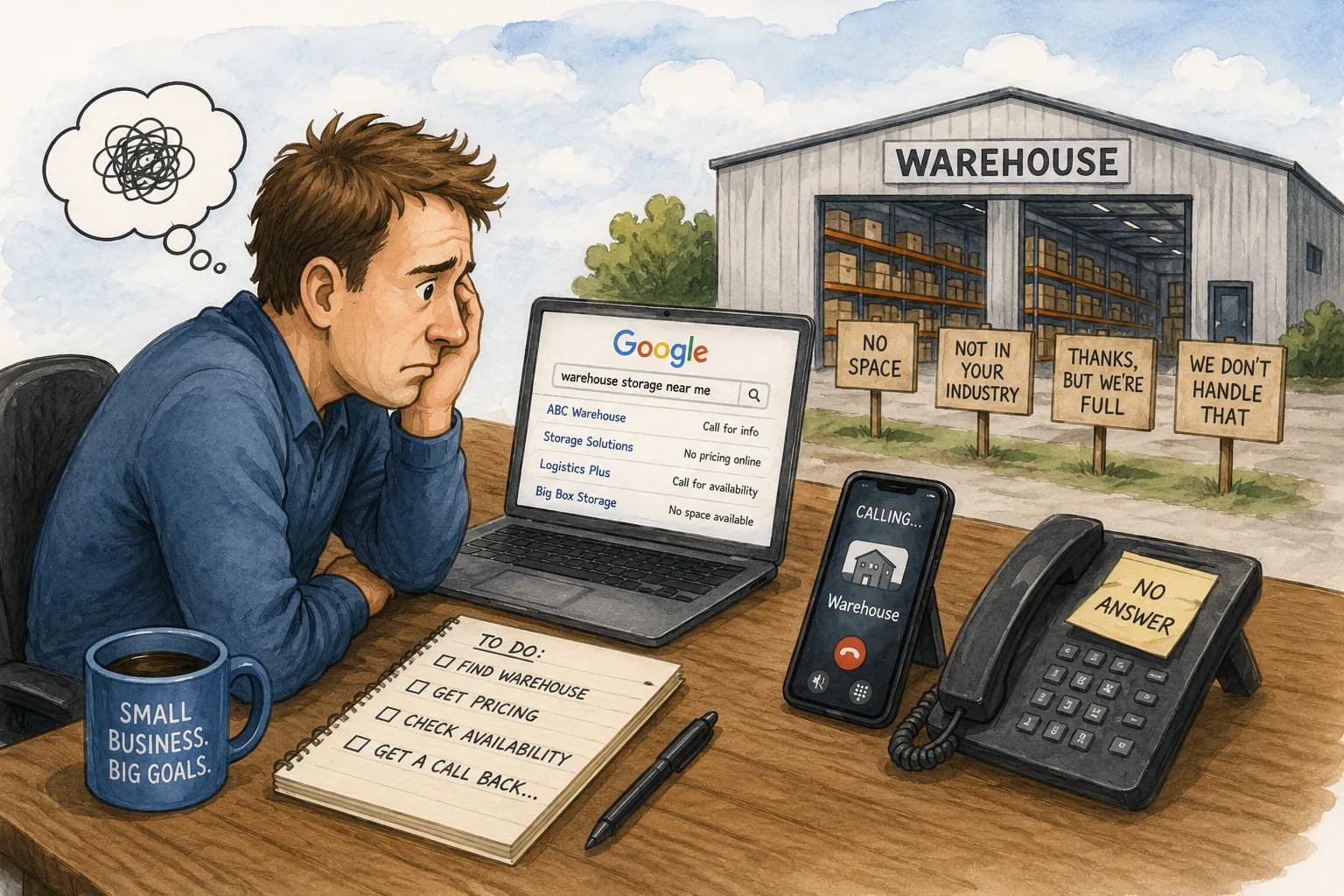
There is no "one size fits all" approach. The right answer depends on your current cash flow, margins, and the complexity of your goods. In the past, finding a 3PL was a manual process of cold calls and blind quotes.
That is why WareMatch exists. We’ve digitized the search process, creating a transparent ecosystem where brands can browse, compare, and book the exact space they need based on accurate, up-to-date information.
The macro-environment will remain volatile. The question is whether your supply chain is built to bend or break. If your fixed costs are eating your margins, or if logistics are distracting you from your next big sale, it’s time to explore the 3PL marketplace.
Ready to find your perfect logistics partner? Book a Demo with WareMatch Today.