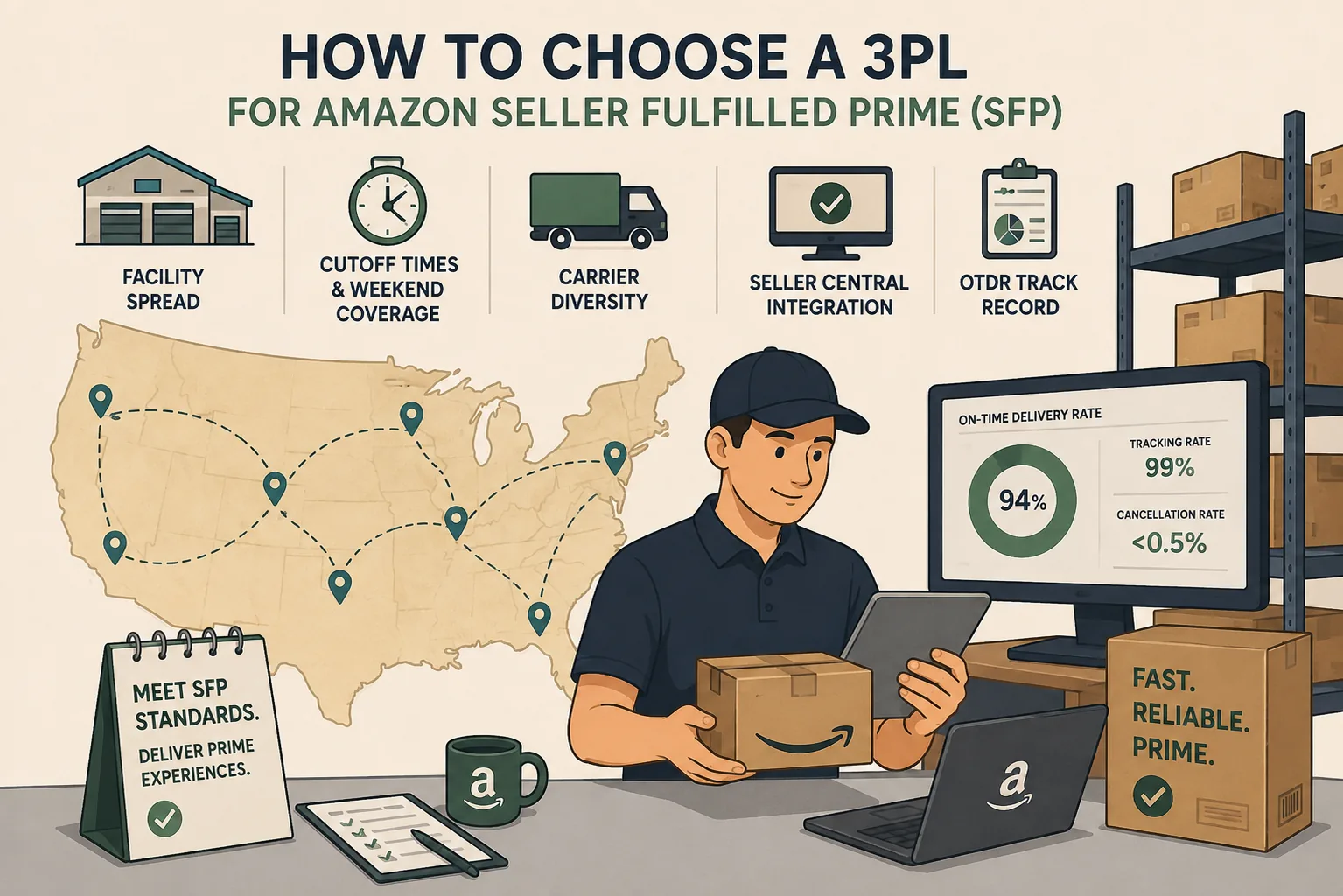
Picking a US 3PL for your Shopify store comes down to scoring candidates against five things: total landed cost (not just the quote), service quality and SLA guarantees, tech stack and integration depth, how the team communicates, and warehouse location relative to your customer base. Don't rely on a single "best 3PL" listicle or on Shopify's own Fulfillment Network to make the choice for you. Shopify's Fulfillment Network only shows its five contracted partners (DHL, GoBolt, Mayple, Shipfusion, and ShipBob), and most published rankings are pay-to-place. A 3PL marketplace with structured, provider-disclosed listings lets you compare any 3PL against your actual requirements, not just the handful someone else decided to show you.
The rest of this piece walks through the criteria and why the two most common ways brands shortcut this decision, a ranked list or a single-network tool, leave gaps.
Why the page-one results don't actually answer this
Search "Shopify fulfillment partner" and two kinds of content dominate. The first is vendor-authored "Top 10" or "Top 20" roundups from companies like AMZ Prep and Speed Commerce. These read as neutral comparisons, but the business model behind most of them is placement fees or affiliate arrangements, so the ranking reflects who paid to be listed, not who fits your order profile best.
The second is Shopify's own Fulfillment Network, which is a real product with real integration depth: it syncs orders, shares inventory data, and reports fulfillment performance inside your Shopify admin, according to Shopify's own fulfillment documentation. But it's a curated pool of Shopify's own contracted partners, currently DHL, GoBolt, Mayple, Shipfusion, and ShipBob, according to Shopify's partner listing. That's five companies out of thousands of 3PLs operating in the US. Shopify Fulfillment Network is a legitimate option for some brands. It is not a market comparison.
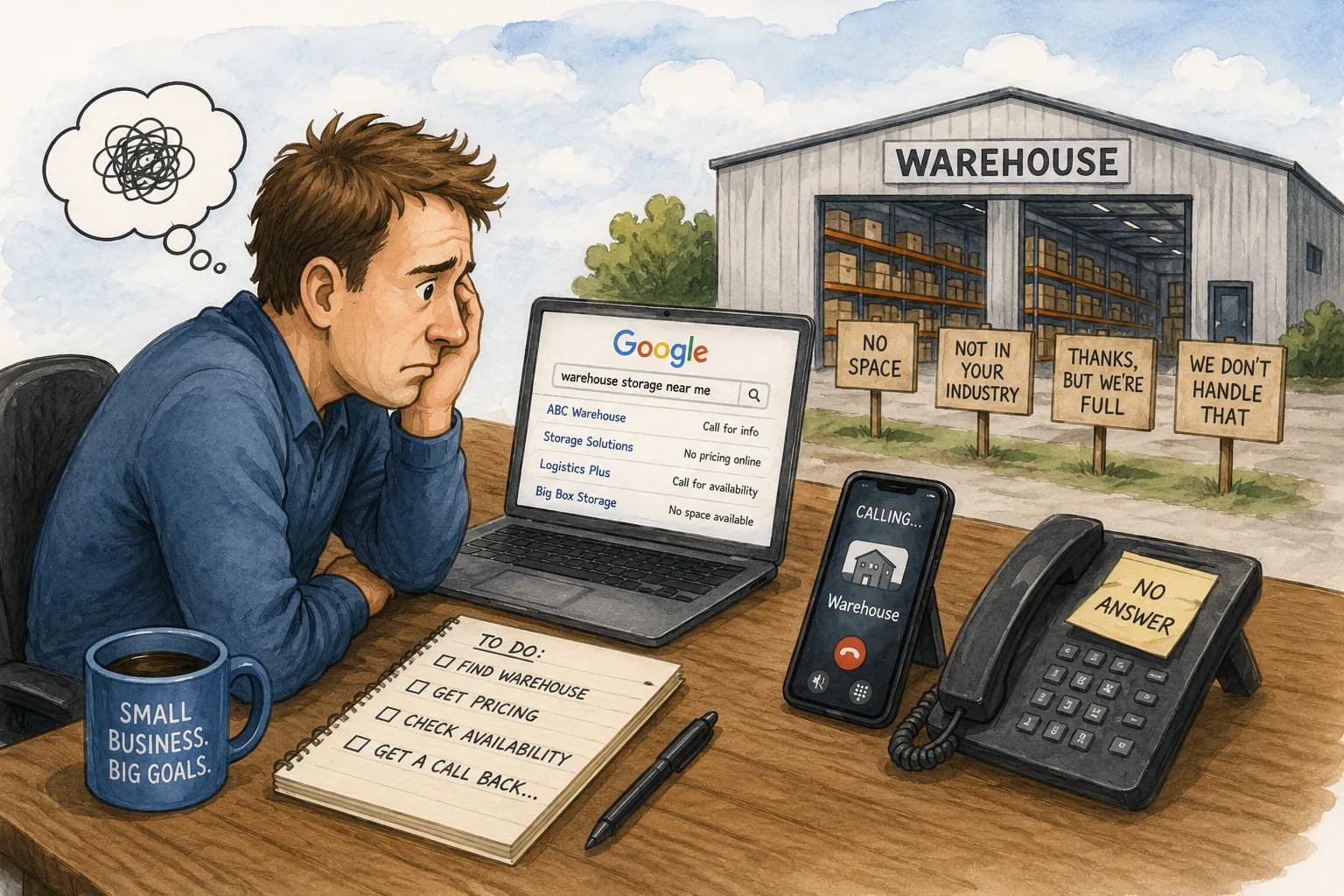
Neither format is built to answer the question you're actually asking, which is: given my order volume, my product, my customer geography, and my growth plan, which of the thousands of 3PLs in the US should I talk to?
Treat this as a partnership decision, not a price shop
Founders often start this search the way they'd shop for a shipping label: get three quotes, pick the cheapest. That approach breaks down fast. A 3PL holds your inventory, represents your brand in every unboxing, and becomes the operational backbone of your order-to-delivery cycle. Switching providers later means physically moving stock, re-mapping integrations, and absorbing weeks of service disruption, a project WareMatch covers in more detail in its guide on switching 3PL providers without disrupting your business. Getting the initial pick wrong is expensive in ways a quote comparison never shows you.
The five criteria that actually matter
Cost, evaluated as total landed cost
A 3PL quote is rarely one number. Receiving fees, storage, pick-and-pack, kitting, returns processing, and shipping all show up as separate line items, and providers bundle them differently. WareMatch's own breakdown of how to read a 3PL quote covers this in depth, but the short version: compare all-in cost per shipped order across your actual SKU mix and order volume, not the headline pick-and-pack rate.
Service quality and SLAs
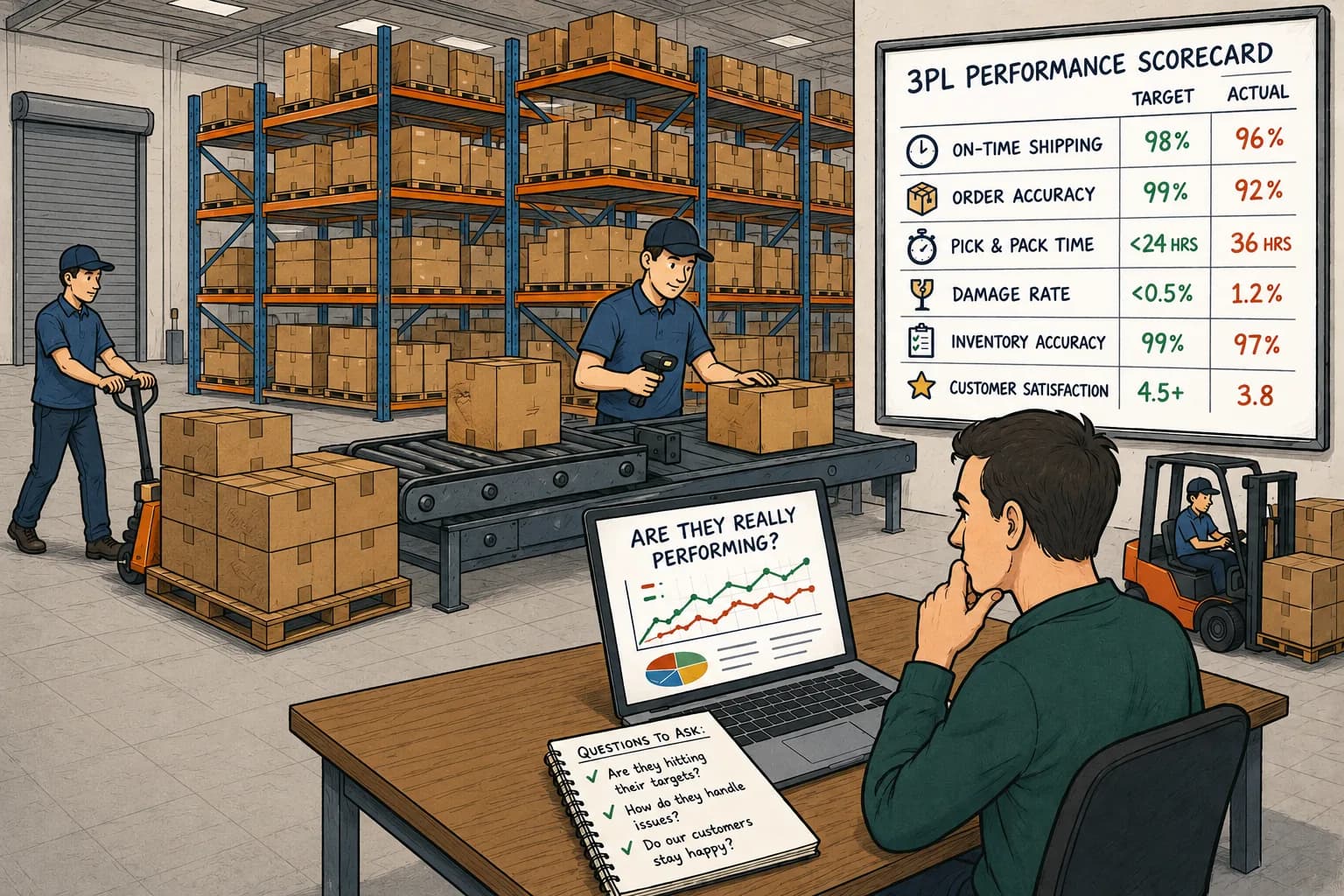
Ask what the provider guarantees in writing for order accuracy and on-time shipping, and what happens contractually when they miss it. A verbal promise of "great service" isn't an SLA.
Operational capability: tech stack and integrations
This is where Shopify specifics come in, covered in the next section. A 3PL's warehouse management system needs to talk to Shopify accurately and in near real time, or you inherit stockouts and overselling.
Relationship and communication
Several 3PL operators interviewed by WareMatch return to this point independent of everything else on this list. A 3PL is an extension of your operations team, and how a provider communicates during onboarding is a preview of how they'll communicate when something goes wrong. It's also worth knowing who you're getting that read on. A 3PL matchmaker or broker that earns a placement fee from the provider it recommends has an incentive to steer you toward whichever options are easiest to compare on price, which tends to flatten the conversation into a commodity comparison rather than a genuine fit assessment.
Location, relative to your customers
This is the criterion brands get wrong most often, so it deserves its own section.
Location strategy: "closest to me" isn't the right heuristic
The instinct is to pick a warehouse near your own office or near your biggest customer cluster. Neither is usually the right logic. What matters is 2-day ground coverage across your full customer base, and for a US-wide Shopify brand, that points toward the geographic center of the country rather than either coast.
Dave Gulas, co-founder of EZDC 3PL, built his company around exactly this logic: a Kentucky-based hub reaches over 90% of the US population within 2 to 3 days via ground shipping from a single location, cutting the high-cost Zone 7 and 8 shipments that eat margin when a single warehouse sits on one coast and ships nationwide. A brand shipping from Los Angeles to a customer in Maine is paying for distance every time. A centrally located facility turns most of the country into a 2-day ground zone without adding a second warehouse.
The takeaway isn't "everyone should pick a Kentucky 3PL." It's that location should be evaluated against your actual customer distribution and delivery-speed targets, using zone-skip math, not proximity to your own desk.
Shopify-specific integration checkpoints
Before signing with any 3PL, confirm these three things work the way you need, not just that they're technically "supported":
Order sync: Shopify's Fulfillment Orders API is built specifically so fulfillment data, including order status, moves, and cancellations, syncs accurately between Shopify and a 3PL's system, according to Shopify's developer documentation. Ask whether your candidate 3PL uses this current API or an older workflow, since legacy integrations sync less reliably and can leave orders stuck in a pending state.
Inventory visibility: If a 3PL's system reports stock levels to Shopify, that data typically refreshes roughly once an hour by default under the standard fulfillment service model, per Shopify's fulfillment service build guide. For a fast-moving SKU, an hour-old inventory count is enough time to oversell. Ask what refresh cadence the 3PL actually runs, not just what the platform supports.
Returns workflow into stock: Shopify's admin includes native Return objects and a returns workflow, but a 3PL still has to physically inspect, restock, or dispose of returned items and report that back into your inventory count. This is one of the most commonly under-specified parts of a fulfillment contract. Ask exactly how many business days elapse between a return hitting the dock and it showing back up as sell-able inventory in Shopify.
Can the 3PL grow with you, not just fulfill you today
A 3PL that's a great fit for 500 DTC orders a month isn't automatically a fit once you land a retail account. Selling into big-box retailers like Walmart, CVS, or Rite Aid means operating under a retailer-specific routing guide and exchanging EDI documents, purchase orders, ship notices, invoices, on a schedule the retailer sets, not you. Miss a window or misroute a shipment and the retailer issues a chargeback deducted straight from your payment, a dynamic covered in detail by 3PLs that specialize in retail compliance work.
Not every 3PL is built for that range. Some 3PLs are purpose-built for early-stage DTC volume and would need to build out EDI and routing-guide capability from scratch if you land a retail account, which means learning your compliance requirements on your account, with the chargebacks landing on you during that learning curve. If retail distribution is anywhere on your two-year roadmap, ask now whether the 3PL already has live, tested EDI connections with the retailers you're targeting, not a plan to build them later.
Kitting and subscription fulfillment as a real differentiator
If your brand ships subscription boxes, gift sets, or bundled SKUs, kitting capability isn't a nice-to-have you add to a checklist after the fact. It changes what "good fulfillment" even looks like. A general-purpose 3PL built around single-SKU pick-and-pack will treat a kit as a special project with its own delays and fees. A provider built for kitting, like GrowthSpoke, a Michigan-based 3PL that specializes in subscription box and custom kitting work, structures its whole operation, staffing, SKU assignment, unboxing quality control, around assembling and shipping multi-item kits at volume. If subscription or bundled products are core to your business, ask about kitting capability and pricing in your first conversation with any 3PL, not your fifth.
Why this decision is genuinely hard to make from the outside
There's a structural reason 3PL selection feels harder than picking most other vendors: fulfillment quality is what economists call an experience good. Philip Nelson's foundational 1970 paper on consumer information drew the distinction between goods you can evaluate before buying, like a camera you can inspect, and goods whose quality only becomes clear after you've already committed to them. A 3PL's pick accuracy, its real response time when something breaks, how it actually handles a damaged pallet, none of that shows up on a sales call or a marketing page. You find out after your inventory is already sitting in their warehouse.
That gap between what a provider claims and what a buyer can verify beforehand is the same information asymmetry problem George Akerlof described in his paper on markets with quality uncertainty, where sellers know more about the true quality of what they're offering than buyers do. In a market like that, buyers who can't verify quality upfront tend to default to price as their main signal, which is exactly how a lot of Shopify brands end up choosing a 3PL, and exactly how a lot of them end up switching within a year.
This is the theoretical case for structured, comparable, provider-disclosed listings over either format currently dominating search results. A ranked blog post doesn't reduce the information gap, it just adds another layer of unverifiable claims on top of it. A single-network tool solves the problem for five providers and ignores it for everyone else. Facility-level detail, certifications, disclosed capacity, verified integrations, actually gives a buyer something to evaluate before they commit, which is the entire point.
Running the process
Write down your real requirements: monthly order volume, SKU count, product type, customer geography, and anything on your 12-month roadmap (retail accounts, subscription launch, international shipping).
Score candidate 3PLs against the five criteria above, cost, SLAs, tech and integrations, communication, and location, using your own numbers, not a generic rate card.
Confirm the three Shopify integration checkpoints (order sync, inventory refresh cadence, returns-to-stock time) with specifics, not a yes/no.
Ask directly whether the provider can support where you're headed, not just where you are now, retail EDI, kitting, international.
Compare more than one option against the same criteria before you sign anything.
That last step is the one a curated list or a single-network tool structurally can't give you, because you're only ever seeing the options someone else pre-selected. Post an RFQ on WareMatch and you submit your requirements once and get quotes back from vetted 3PLs matched to your actual profile, not a shortlist someone else built for a different brand. You can also browse verified 3PL listings directly if you'd rather compare capabilities before requesting pricing.